Showing posts with label BBC. Show all posts

Thursday, 16 November 2017

Who's Listening and How - the Latest

It's tempting to wrap up and send a copy of the latest MIDAS survey to every press columnist  for Christmas.  This jolly publication from the Rajar folk always offers some interesting data, which often contradict many of the assumptions from those innocents with the temerity to pen articles about our beloved medium.

In September, the intrepid researchers re-contacted just over two thousand of the long-suffering folk who'd already filled in a Rajar diary to dig deeper into their listening habits. We should thank Ipsos for their valiant efforts.

How is radio being consumed – and how are those methods of consumption trending?

Despite all the hullaballoo, live radio still commands an impressive share of ear-time for UK citizens. 75% of all the stuff on which we feast our ears - from online music streaming and podcasts to ‘listen again’, CDs or battered Agfa cassettes – is good old live radio. Everybody else’s share of that ear-cake is surprisingly about the same as two years ago, with only another 2 percentage points of live radio’s time being scattered across the many other options.  On-demand music streaming (OMS) accounts for 8% of adult ear-time now - and its consumption is daytime-led and male-driven.

The picture changes by demo, of course.  Although a very healthy 82% of 15-24s do seem equipped to turn on a live radio, they appear to get bored pretty quickly.  Only around half of  the ear-time of messy-haired 15-24s is taken up by live radio – compared to 77% for 35-54s. As can be seen, on-demand music streaming (OMS) is the single biggest villain eating the breakfast of those 15-24s.

The couple of standard Rajar radio audience graphs (below) indicate that live radio’s weekly reach generally amongst 15-24s has declined from 90% at the turn of the decade to 83% now, against a reassuringly stable 'all adult' figure. 

Weekly time spent listening amongst 15-24s across those years, however, has fallen a hefty 16% in that time down from  17 to 14.2 hours per week. 

We’re all spending a little less time with radio each week, though - falling in seven years by 11% for all adults, 12% for 35-54s and 4% for 65-74s. We've all got a lot more to do with our lives.

Back to MIDAS, podcasting only accounts for a small slice of all ear-time –  although taken together with listen again, it now accounts for 4%, much the same as last year. That’s certainly not shoddy for this thing with a funny name and it looks set to grow slowly - but it's not exactly disruptive. Podcast listening is younger than its 'listen again' sister - and more male. 

Live radio - and podcasts - both reach their maximum audiences between 8.00-8.15 am. On-demand music services see a high between 3:00-3:15 pm - and for 'listen again', the peak is between 10:15-10.30 pm. It's true though that 'listen again' rattles along fairly consistently through the day.

So – what do we listen to live radio on? Mostly on a radio-shaped radio.  There is little doubt, however, that AM/FM listening is gravitating to DAB. DAB has grown from 35% of listening in Autumn 2014 to 41% now – and FM down from 43% to 39%. 

If you draw a straight line graph based on the FM decline, which would be utterly foolish, FM dies out in the year 2036 - by which point Judi Dench will be 102. The UK was late to join the FM transmission party – but it’s lasted us over 60 years already, so let’s not moan. 

Maybe strangely, the amount of live radio consumption which is not on a radio set has stayed about the same (16% in 2017) across the last four years.

Around half of adults now have a radio app on their phone - about 8m more people than three years ago. Penetration amongst the demos are bouncing around – but overall amongst all adults the figure rises from 35% in 2014 to 49% in 2017. Perhaps as smart phones have become more affordable, the 15-24s have been catching up with their 25-34 balding brothers. Whatever 2018 brings in our changing and worrying World, we can relax knowing we’ll likely hear the news that many more Brits have a radio app on their phone than don’t.

We once paid non-listeners to listen to our station as part of a focus group exercise. One recalcitrant trotted back in the following week in a frayed crimson parka to say they couldn’t find us on their telly. Listeners expect you to be everywhere – and it’s an expensive business for our industry. AM/FM radios are unsurprisingly the most ubiquitous gadgets which people turn to - followed closely behind by DAB radios. 11.6% do use their TV for at least some of their listening. But to turn a stat on its head – just to make again the point that radio listening remains more traditional than folk think - 90% don’t listen to any live radio on their smart phones.  So – they may have a radio app on their phone – but they are not thumbing it too frequently.  Can we do more about that?
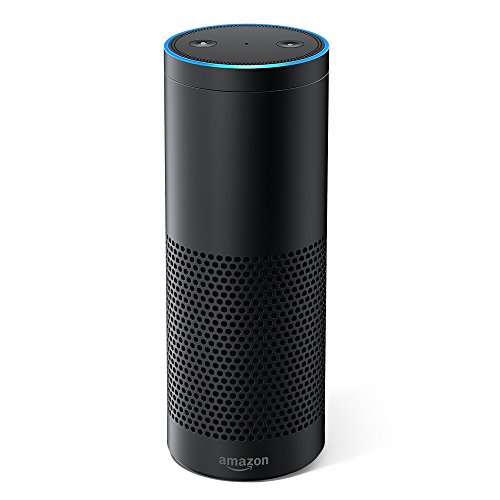
OK Google, we really should applaud smart speakers and buy everyone one for Christmas.  ‘Cos when it comes to using those, people are far more likely to ask Alexa to play a radio station than any other form of comparable audio entertainment (58% of device eartime). On i-pads and smart phones, folk are much more likely to get up to all sorts. 

Although it accounts for but a pint-sized proportion of radio listening time and by currently just 1.1% of adults - there is something hugely encouraging about the love affair between radio and smart speakers. The biggest - and most distinctive - radio brands will win - and current radio operators may or may not be running those. Analyst firm OVUM suggests 40% of homes will be 'smart' by 2021.

Radio remains a one to one medium. 51% of all adults suggest they listen to radio on their own, with 20% saying they listen with their partner.  Amongst the less -coupled 15-24s, there are a wider variety of possibilities -  just 43% listen alone, but 11% with families and 32% with colleagues

In-car listening is interesting. MIDAS suggests that whilst a majority of adults will choose to listen in on the move (57% reach), the share of listening attributed to those travellers is much less than columnists might expect, being outshone by the amount of time people listen whilst working or studying.  I often wonder whether we programmers take into account sufficiently when our light and heavy listeners are most likely to be with us.

Overall, MIDAS suggests, if you picture your listener serving an angry customer, reading a physics text book, driving to Ingoldmells, eating a microwave meal, scrubbing the grill pan or just chilling – then you’ve accounted for about 90% of all listening.  The column headings indicate, however, no-one has sex whilst listening to the radio. Most off-putting if it's your own voice-tracked show.

All data MIDAS, RAJAR/IpsosMori September 2017 unless otherwise stated.


Grab my book 'Radio Moments': 50 years of radio - life on the inside. A personal and frighteningly candid reflection on life in radio now and then. The drama - the characters - the headaches - the victories.


Also 'How to Make Great Radio'. Techniques for today's presenters and producers.  Great for newcomers - and food for thought if you've been doing it years.


Monday, 7 November 2016

Bye for now, Jimmy Young

Presenters like to sing loudly with their headphones on.  Very few go on to huge chart success.

Jimmy Young did, hitting the 'top-spot' on the NME chart with ‘Unchained Melody’ and ‘the Man from Laramie’; and amassing an impressive string of other 50s favourites in the days when Number Ones sold millions.

He is best-remembered, however, for his radio. Hear, here, this unmistakable presenter, with his trademark Gloucestershire burr and catch phrases. He dominated daytime radio for decades, retiring reluctantly in 2002, aged 81, after 42 years at the BBC.


Jimmy had helped out in the family baking business, indeed he and his dad ended up in court when he was caught driving the family van in his early teens. 

His first love throughout was music. His mother taught him piano and encouraged his voice training. 

After a spell in the forces and as an electrician, a BBC producer spotted him playing piano at a swimming club.  Jim was duly handed his BBC Bakelite lanyard in August 1949.

His BBC career saw him hosting ‘Housewives Choice’ on the Light Programme for a few weeks in 1960, a successful run on weekend lates - and a few other offerings on Auntie's chill-out service. He was also to record  shows in London for the huge Radio Luxembourg. 

The broadcasting break had come not a moment too soon, as the ballads for which he’d been famous gave way to dirty rock ‘n roll.

Jimmy went on to appear daily on the fledgling BBC Radio 1, by which time he was already older than Moyles was when he left. Jim hosted its mid-morning show, broadcast, at least partly, on both Radio 1 and 2. 

'The JY Prog', as it became, migrated to a new home at Radio 2 in 73, with cautious programme management insisting that no interview begin until 15 minutes of the programme had elapsed. The programme's familiar sig tune, 'TownTalk' by Ken Woodman & His Piccadilly Brass, signaled the start of lunchtimes to 'seven and a half million housewives' in kitchens in the Home Counties.  

The vari-speeded ‘What’s the recipe today Jim’ was as much a part of national radio folklore back then as Ken Bruce’s PopMaster is now. 


Music-magazine programmes can work on radio, but only in the most capable of hands. Mixing real current affairs with jolly pop songs and chit chat is an art – and Jimmy had it - moving effortlessly from Carpenters to Cold War and colanders. The programme quickly acquired a reputation as the one politicians wanted to be on. In February 1975, Margaret Thatcher afforded her first interview as party leader to chirpy Jim.  JY’s show served huge audiences with insight into the issues of the day; albeit in a very different way from his successor, the excellent Jeremy Vine.

Little wonder his longevity in the national limelight and his reputation amongst those who matter earned him recognition at the Palace.  He was awarded the OBE in 1979, the CBE in 1993 and the Knight Bachelor of the Order of the British Empire in the 2002 Queen's New Year's Honours List for his services to broadcasting.

This gentleman broadcaster was a quiet, professional sort, who achieved huge audiences with a consistently successful radio programme for which he will be long-remembered. 

Bye - for now - Jim.


Monday, 17 August 2015

Nottingham Calling

Bridlesmith Gate lies at the heart of Nottingham's fashionable quarter.  

Jack Wills nestles near to Diesel; Flannels close to Ted Baker; and Paul Smith's quaint original shop lives on just a stone's throw away.

Number 4 Bridlesmith Gate stands towards the St. Peters' Gate end of this now pedestrianised street, squeezed between a tea shop and the Body Shop.  The attractive stone 1876 premises were once a pub, with the original landlord's initials carved into the stone; the Dog & Bear was later to attract a rowdy reputation.  

Part of this Grade II listed building also came to house Nottingham's first ever radio station, 5NG, provided by the new British Broadcasting Company. 


Its studio stretched out about 18' x 35', equipped with a large, lonely microphone. A second microphone was reserved for outside broadcasts; and a gramophone was on-hand for the playing of records.

The B.B.C.'s hasty initial strategy comprised the assembly of a network of local stations, with Nottingham being added to the map as the sixteenth outfit on a damp Tuesday September 16th, 1924. The 5NG signal was transmitted from an aerial dangling from a chimney on Noel Street.

Nottingham Evening Post 1924
20.00 The Band.
21.20:Opening Speeches.
Mr. J. C. W. Reith (Managing Director B.B.C.).
21.30:Speeches by:
The MAYOR. 
The SHERIFF.
The PRINCIPAL of UNIVERSITY COLLEGE. „
9.50. The Bend. S.B. to ""
Folk Song Suite Stations.
. 
Vaughan- Williams (1) (1) March, " Seventeen
- Comp Sunday"; (2) "My
Bonny Boy" ; (3) Folk Song from Somerset.
22.00:WEATHER FORECAST and NEWS.
Simultaneous broadcast from London.
Local News.
22.15:Organ Solo.
22.20:The Band.
22.30:Close down.

The launch was an ambitious affair, heralded by a live outside broadcast from the Albert Hall with the RAF band providing an opening segue.  Accordingly, for the record, Wagner's 'Flying Dutchman' Overture was the first tune to be played on radio in Nottingham.  Such was local enthusiasm, a
ttendance exceeded the 1600 capacity and some unfortunate souls were left out in the rain enjoying a relay from loudspeakers at the Arboretum, kindly sponsored by Pearsons of Long Row.  

As the applause subsided, the B.B.C.'s inexperienced MD, John Reith, uttered a few encouraging words; followed by the Mayor and the Sheriff doing much the same thing.  After another burst of music, the switches were flicked and the citizens of Sneinton, Sherwood and Southwell witnessed their first late news from London crackling down the line. Those network bulletins were a relatively new affair: until the year before, content had been dictated by telephone from the London station to its patient little sisters across the country.

The station had been established as the fifth in a series of low-power relays around the UK, with 5NG supporting the larger 2ZY in Manchester from which it was fed via a telephone circuit. 
 The relays operated at 200 W,  compared to 1.5 kW for the main stations, together claiming to reach 75% coverage of the UK population; more than the first tranche of commercial radio (ILR) in the 70s; and about the same as the proposed second national DAB multiplex from Sound Digital.

5NG transmitted variously on wavelengths of 322m, 326m or 275.2m medium wave, as the Post Office mandarins pulled out their hair trying to make sense of the growing enthusiasm for broadcast spectrum here and overseas.

There was a proportion of evening local programming too, amounting to 2,782 hours in the first year. The jaunty 'Children's Corner', was a popular element, affording a stage for a host of local 'aunties' and 'uncles'. Auntie Ruby was in charge, who, by day, was Ruby Barlow, a solicitor's wife with theatrical leanings. Laurie Bagshaw was also much-loved by the 5NG team and  listeners alike.  Known for having 'racy friends', few knew how he actually earned a living, but he appeared to have sufficient free time to help manage the whole affair.

"The cumulative effect of this work has been to identify very closely the Nottingham Station with the life of the people. Nowhere has this been more apparent than with the work carried on in the Children's Hour. Nottingham has been singularly fortunate in those whose lot it has been to bring joy and happiness into so many homes. Day after day, year in, year out, the younger generation have been able to listen to songs, tales and jokes, a form of entertainment to which many of them had been strangers hitherto."  (BBC Yearbook 1928)

Lest older brethren felt excluded, the schedule also dutifully featured 'corners' for others, including "Scouts' Corner" and "Teens' Corner".

Local press engaged fully, with no hint of paranoia about the fledgling medium. In a regular '5NG attractions' column, one sub-heading read 'Some Good Programmes Next Week', beneath which the Nottingham Evening Post trumpeted a special local concert on-air featuring 'entertainer Stainless Steven'.
Outside broadcasts included the first ever radio coverage of the opening of Goose Fair on 1st October 1925; and the King opening the new University buildings on July 10th 1928, after which the City's Mayor became a Lord Mayor for the first time. Much excitement ensued when annual gatherings of 5NG's 'Radio Circle' were beamed from the old Exchange Hall.

A Mapperley lad made his debut on 5NG at the age of 12: Cyril Stapleton, who became a well-known violinist and bandleader, eventually playing with Henry Hall, the LSO and even on some Frank Sinatra tracks. As a schoolboy on 5NG, he broadcast in scholars' concerts "Master Cyril Stapleton (solo violin)".

Home made crystal sets were painstakingly assembled with long makeshift aerials to receive the signals from near and afar. The Nottingham Evening Post kept listeners abreast; and a radio column called "Wireless Whispers" was duly introduced. 5NG reception reports came in not just from Nottingham but also Loughborough, Lincoln, Leicester and Derby. Listeners were even tempted to invest in an expensive valve set, costing as much as 7 pounds.
  
The B.B.C. 1928 yearbook  proudly reports:

"It is three years since the Nottingham Relay Station was first opened, and from that date began a revolution in the artistic life of the city. So much a part of the life of the community has Broadcasting 'now become that it is difficult to imagine its absence.  In these three years more than 40,000 licences have been taken out in the Nottingham area, which has as many and perhaps more listeners per thousand of the population than any other centre of the B.B.C. activities. How has this been achieved?" 
Mr C Wheeler at the 5NG control desk in 1928

"Nottingham is not renowned as a musical town, and yet musical artists of all kinds have offered their services for Broadcasting. The encouragement given to promising artists has been no small factor in building up the popularity of the Station. In addition to routine concert work, a number of popular community singing concerts have also been given from which local charities have benefited. Outside Broadcasts of events of civic importance have been a regular feature of the programmes." 

"Broadcasting has come to stay. The B.B.C. has set up a standard in Nottingham which must never be lowered in any way. Radio is quite as much a part of the daily life of the people as the newspapers, a position which must be kept and consolidated".

Life was not to be so simple. As technology advanced, 5XX on Long Wave, eventually from Daventry, took over; and 5GB supplied a Medium Wave service to the Midlands. National and regional radio had begun. 5NG was no longer needed.  The function of a relay station had become defunct; and its serendipitous emergence as a commmunity service was disregarded.


In the words of the understandably grumpy new Lord Mayor (Alderman Huntsman): "With all due respect to the authorities in this matter, I think they have overlooked the regional importance of a great centre like Nottingham. The connection between Nottingham and Birmingham is very weak.There is little association or mutual interest between the two great cities". (Nottingham Evening Post)

The pleas went unheeded. It was decreed that networked programmes should replace local ones.  Nottingham listeners were placated by assurances that their local talent would enjoy a bigger audience from  the regional transmitters; and that programme quality would be higher.  

Plus ça change, plus c'est la même chose. 

Uncle Laurie and Auntie Ruby promptly defected to Birmingham; and 5NG turned off its valves on 31st October 1928 – after just four years. It was to be four decades before local broadcasting returned to Nottingham.


More radio nostalgia - and a very personal take - in my book Radio Moments - Fifty years of radio, life on the inside 


Radio Secrets - An insider's guide to presenting and producing powerful content for broadcast and podcast

Sunday, 12 July 2015

Sounds Like You Want to Hear - 40 years on

Reunions are awful things. Bumping into people you'd rather not see again; people you barely recognise; and acknowledging that you really are as old  as everyone else is.

The 40th anniversary celebrations of the first tranche ofcommercial stations are well underway. I gather the LBC celebrations in 2013 went off with a bang; the old Metro, Hallam and Piccadilly crowds really enjoyed themselves; and just a few weeks ago the, old Radio Tees (Tfm) crowd toasted four decades since Les Ross lifted the arm on the turntable for the very first time.

Last weekend saw the 40th anniversary of commercial radio in Nottingham. Radio Trent was the 13th in the list of stations celebrating those forty changing years. 

We were privileged to be allowed to take over the old premises on Castle Gate for the night, thanks to the wonderful co-operation of its current occupants, Base 51/NGY. (@Base51) They manage an impressive new centre for young people in the city, housed in this lovingly restored historic building.  The old car park, home of so many arguments in Trent's day, when presenters would rush up during a two minute oldie to shift their vehicle so the OB Land Rover could escape, has become a surprisingly attractive patio where generations of  the old Trent guard could assemble in the early evening July sunshine.

Ron Coles, who, as MD, nursed the station through its mid-life crises, stood to relay messages from those who could not attend; and Nick Shaw paid tribute to all those who had gone to work in what must now be a very great radio station in the sky, including his dear brother, John.

In a bizarre twist, the new venture now houses Notts YMCA radio/audio (@YMCA_digital) facilities in its basement, so in some senses the old subterranean studios have been restored to their seventies purpose. The breeze block studio walls remain, and even the old sealed window through to the old MCR 'control room'.  John Peters, first voice on-air, stared at his reflection, aged 24, in the glass.

A drink or two had been consumed by the time guided trips around the building began, so emotions were high as the Trent team revisited the scenes of their crimes.  Newsreader, Tim Heeley, drew up a chair in what would have been the newsbooth to deliver a familiar, reassuring late night bulletin, as he had most nights in the 80s.

How brilliant it was to shake hands once again and trade memories with  the journalists, the presenters, the sales people, the traffic team, the creative producers and accounts staff who had captained the old station through its colourful past.  I tingled when I met the characters I'd grown up listening to, whose voices were the reason I worked in radio.

All generations were represented, from the smiling pioneers right through to a welcome smattering of the current Capital crowd, including  Dino & Pete from breakfast who were welcomed as inheritors of the 96.2 crown.  They represented today's necessarily efficient, focused radio stations, which now together deliver significantly greater audiences to East Midlands' commercial radio than we battled for in the vintage, vinyl days.

Returning to our old home was a little like one of those odd dreams where random people from your life gather in an impossible location.  Or being treated to an opportunity to step back in time, and continue, in loco, the conversations which had been severed some decades before.

As we cleared up the venue late that night and restored the venue to its new purpose after a beautiful emotional journey, we slotted our  memories back in their rightful place at the back of our minds.  The old logos, the old jingles, the old pics returned to their cardboard boxes too, like Christmas decorations on the twelfth night. The reminiscences  are over for now. 

Meanwhile, for all those lucky enough to still be working in this great medium and still as excited as ever, let's set out to create some more great times we can, one day, also look back on with similar huge enthusiasm.

Thursday, 18 June 2015

You’re up to date, I’m Fred Farnsbarns

Why do people insist on proclaiming their own name when they appear on the radio?  

It’s a policy I can defend with energy for regular programme presenters who spend hours each day with their listeners, for years and years.  For those personalities and on most formats, it’s only polite every now and again to shake hands with the dear listener, say hello and announce who you are.

What is a little more puzzling is when ever-changing contributors diminish their short time on air by announcing their name as though it truly is much more important than anything else.  The travel, weather and news headline folk really seem hell-bent on trumpeting their name sufficiently clearly for their mothers to hear. 

On some stations, by the time we’ve got through the station jingle and sponsor, and they've announced the fact that they are about to deliver the travel news and announced their name in full, there’s scant time for the hold-up on the M1.

On others, we are formally introduced to the nasal work experience lad who’s been asked to voice a news report into which he’s had no input, for no discernible reason. His identity is of no relevance and adds no weight to the contribution. He's hardly our Home Affairs correspondent.

This headline position of the contributor's name suggests someone believes it is the most important thing of all.

Again, if you are an expert correspondent in your field, ‘part of the show’, the whole show (whatever the format), or make a regular substantive contribution, there’s a good case to be made for saying who you are.  In those cases, your reputation and familiarity brings value.  On a fast-moving rota, where different thoroughly proficient voices pop up across the schedule, delivering utility information without reputation, do listeners really care too much to whom those honeyed tones belong?

I wonder why we do it.  In my experience, sadly, most listeners to many successful music stations only just remember the names of excellent presenters, even though they appear for hours every day.  How many would actually recall the names of the folk providing the many breathless cameos?

It was not always thus.  Until the ‘30s, British news bulletins simply launched straight into the latest delicate headlines from the Empire, delivered in impeccable tones.  The perils of wartime, however, brought a risk that bulletins from other less reliable foreign sources might be confused with Auntie's. At a time where the first casualty is said to be the truth, it was felt that listeners “must be able to recognise instantly the authentic voice of BBC broadcasting".

The instruction was accordingly issued that newsreaders should identify themselves.  FrankPhillips was first to do it - 75 years ago, in July 1940.

Back then, they made a meal of it too: ‘here is the news - and this is Alvar Lidellreading it’. 

Identifying yourself brings its price too: listeners know who to blame.  One irate listener scribbled a neat note to the DG after hearing Phillips purring from his Bakelite set: "sack that man immediately; we'll never win the war while he is reading the news".

Now, everyone’s cottoned on, and we’re all hissing our names, regardless of the relevance. Maybe we should extend the policy by introducing ourselves proudly by name each night to the checkout operator at Tesco. I could even play my accapella name-checks to them from my phone, come to that.

This July, the habit is 75 years old.  Do we still need quite so many names in quite so many places? Time for a re-think now the War’s over?

That was David Lloyd  reporting.


Saturday, 16 May 2015

A blog about a book: 'How to Make Great Radio'

Over dinner in my favourite Indian restaurant in Nottingham recently, I was rambling intolerably about 'my book' to one of my cynical but lovely radio friends.  I told him I'd learned loads whilst writing it. '"What like?", he asked, as he stuffed a naan bread in his face.

So, when the Jiffy bag finally arrived from the publishers last week, bearing ten lovely-smelling first copies of my humble publication, I thumbed gingerly through the pages, to remind myself what I hadn't known when I started to write it.

Every day in radio is a school day, not least when you're trying madly to justify, or disprove, those 'radio assumptions'.

I thought I was the only competition cynic until I stumbled across the words of legendary American programmer, Bill Drake: "We did a lot of on-air promotions at KHJ, and we did almost none at KFRC in San Francisco. Both stations were successful". In his opinion, "most contests are garbage".  He's surely right; far too many offer little in the way of witness value. They are either too demanding, too dull or too exclusive; with prizes seen as unattainable and mechanics focused on the minority taking part, not the majority listening.  Gone are the days when the radio station was the only place you could win a decent prize.  BBC Local Radio, which suspended contesting in the days when it was discredited, would likely concede that their stations are better without  many of them.  Cheers, Bill. Nice to stumble across substantiation for my prejudice.


Isn't it annoying when 'major names' pop up on radio who fail to grasp the 'one listener' thing.  That 'You' thing.  They drone on about "anyone out there'" and getting my 'thinking caps' on.  For goodness sake, anyone who knows anything about our great medium knows that the most important word is 'you'.  If it's good enough for Ken Bruce: 'People respond to one person – talking to them as one person’; and Wogan: ‘Radio engages because you talk to an individual’, it should be good enough for the rest of us. I also cite some early crackly recordings from the 'first' disc jockey, Christopher Stone, from 1927 who said in his show: 'I know you'd like to hear some more of that, and so would I".  Almost a century ago, and at the very beginnings of our medium, he'd nailed it.

Few candidates in the last General Election stood up to make a speech without offering an anecdote about the chap they'd 'bumped into' the night before.  We know that story-telling works.  The greatest presenters master the art on radio.  The greatest ads call upon it.  Vocabulary, pace and detail create colourful pictures.  In researching the book too, I was drawn too to the words of John Cleese, who spoke of the mental 'skip' the listener makes from the start of a tale to the punchline.  In that skip lies the pleasure and amusement. Too large, it fails, Too small it offers no satisfaction.  One word can make a difference.  Even if just a  swear-word: ‘You were only supposed to blow the bloody doors off!’

Why do some newsreaders whine every sentence and inexplicably draw out the last word, regardless of its significance?  Accomplished voice coach, Kate Lee, suggests that great reading is often about ‘sounding even more yourself ’. She observes how some readers appear almost intimidated by the importance of the material. Once they say to themselves ‘this is news’, she believes their brain then promptly ignores all all the natural nuances of conversation. Contemporary, conversational news delivery is a real art.

Fascinated by the way the 'mood' in a studio can change what comes out the speakers the other end, it was great to hear the anecdote about a leading performer who used to play the Cagney & Lacey theme tune before starting his show.  Off on that tangent, I then stumbled across how both David Cameron, and indeed Enoch Powell in his time, observed that a full bladder kept their mind alert and their speeches powerful.  Maybe not one to try.

I stumbled across some fascinating material about the voice and how it engages so well on radio.  Including the theory that the 'disembodied voice' on the radio connects with the listener as does a mother's voice to a child in the womb.


And who would not want to know the story of the birth of tight, Top 40 format radio in a bar in Omaha, Nebraska.  Next time one of your listeners complains about hearing the same song over and over again, you'll want to know that tale too. 

And so the list goes on.  I learned a little more about mic technique; commentary; interviewing; the psychological response to words; and getting callers on-air.  I mused about dealing with over-enthusiastic listeners; spoke to some great producers; and delved into the use of social media.  I stumbled across some brilliant old research about the relative merits of male and female voices; and I counted the words per minute which Wogan deployed as he said his last breakfast farewell. 

I was persuaded to add a chapter about how to get into our medium; and I volunteered another about how to keep your job.  And some necessary caution on risk-taking, 'stunting', research, law and compliance.

Given that text books are boring and the chances of any publisher agreeing to my autobiography are slim, I've littered the book with anecdotes from my lucky time in the business.  Lest I forget the two occasions when the police have called into reception; Dale Winton's interview techniques; or the words of advice Mrs. Thatcher's daughter proffered on programme preparation.

And there's the chapter about teasing.

As every 'author' will understand, the awful thing about writing a book is that the second your work is despatched to the publisher, you think of something you should have included. Plus, last Autumn, no-one new what Perisope was. Things now change by the day in our great radio world.

Many thanks to the likes of Matthew Bannister, Christian O'Connell, John Myers, Ben Cooper and Nick Ferrari for offering generous early reviews.  What's useful is that they suggest it's by no means just a book for beginners. 

Radio is rarely a matter and wrong. Some of the greats break the rules brilliantly.  And those who disagree with my mad assertions or theories will hopefully concede that the debate itself is likely helpful. Or they can write their own book.

If it helps, please grab a copy at £14.99 (£10.99 e-book) from my friends at Biteback Publishing.  Proceeds to the Radio Academy. 


What can radio learn from how it has handled COVID 19?

In times like this, you turn to your friends. And radio is a friend. Day or night, it’s there to pick-you up, to comfort you, to explai...