Showing posts with label ILR. Show all posts

Thursday, 16 November 2017

Who's Listening and How - the Latest

It's tempting to wrap up and send a copy of the latest MIDAS survey to every press columnist  for Christmas.  This jolly publication from the Rajar folk always offers some interesting data, which often contradict many of the assumptions from those innocents with the temerity to pen articles about our beloved medium.

In September, the intrepid researchers re-contacted just over two thousand of the long-suffering folk who'd already filled in a Rajar diary to dig deeper into their listening habits. We should thank Ipsos for their valiant efforts.

How is radio being consumed – and how are those methods of consumption trending?

Despite all the hullaballoo, live radio still commands an impressive share of ear-time for UK citizens. 75% of all the stuff on which we feast our ears - from online music streaming and podcasts to ‘listen again’, CDs or battered Agfa cassettes – is good old live radio. Everybody else’s share of that ear-cake is surprisingly about the same as two years ago, with only another 2 percentage points of live radio’s time being scattered across the many other options.  On-demand music streaming (OMS) accounts for 8% of adult ear-time now - and its consumption is daytime-led and male-driven.

The picture changes by demo, of course.  Although a very healthy 82% of 15-24s do seem equipped to turn on a live radio, they appear to get bored pretty quickly.  Only around half of  the ear-time of messy-haired 15-24s is taken up by live radio – compared to 77% for 35-54s. As can be seen, on-demand music streaming (OMS) is the single biggest villain eating the breakfast of those 15-24s.

The couple of standard Rajar radio audience graphs (below) indicate that live radio’s weekly reach generally amongst 15-24s has declined from 90% at the turn of the decade to 83% now, against a reassuringly stable 'all adult' figure. 

Weekly time spent listening amongst 15-24s across those years, however, has fallen a hefty 16% in that time down from  17 to 14.2 hours per week. 

We’re all spending a little less time with radio each week, though - falling in seven years by 11% for all adults, 12% for 35-54s and 4% for 65-74s. We've all got a lot more to do with our lives.

Back to MIDAS, podcasting only accounts for a small slice of all ear-time –  although taken together with listen again, it now accounts for 4%, much the same as last year. That’s certainly not shoddy for this thing with a funny name and it looks set to grow slowly - but it's not exactly disruptive. Podcast listening is younger than its 'listen again' sister - and more male. 

Live radio - and podcasts - both reach their maximum audiences between 8.00-8.15 am. On-demand music services see a high between 3:00-3:15 pm - and for 'listen again', the peak is between 10:15-10.30 pm. It's true though that 'listen again' rattles along fairly consistently through the day.

So – what do we listen to live radio on? Mostly on a radio-shaped radio.  There is little doubt, however, that AM/FM listening is gravitating to DAB. DAB has grown from 35% of listening in Autumn 2014 to 41% now – and FM down from 43% to 39%. 

If you draw a straight line graph based on the FM decline, which would be utterly foolish, FM dies out in the year 2036 - by which point Judi Dench will be 102. The UK was late to join the FM transmission party – but it’s lasted us over 60 years already, so let’s not moan. 

Maybe strangely, the amount of live radio consumption which is not on a radio set has stayed about the same (16% in 2017) across the last four years.

Around half of adults now have a radio app on their phone - about 8m more people than three years ago. Penetration amongst the demos are bouncing around – but overall amongst all adults the figure rises from 35% in 2014 to 49% in 2017. Perhaps as smart phones have become more affordable, the 15-24s have been catching up with their 25-34 balding brothers. Whatever 2018 brings in our changing and worrying World, we can relax knowing we’ll likely hear the news that many more Brits have a radio app on their phone than don’t.

We once paid non-listeners to listen to our station as part of a focus group exercise. One recalcitrant trotted back in the following week in a frayed crimson parka to say they couldn’t find us on their telly. Listeners expect you to be everywhere – and it’s an expensive business for our industry. AM/FM radios are unsurprisingly the most ubiquitous gadgets which people turn to - followed closely behind by DAB radios. 11.6% do use their TV for at least some of their listening. But to turn a stat on its head – just to make again the point that radio listening remains more traditional than folk think - 90% don’t listen to any live radio on their smart phones.  So – they may have a radio app on their phone – but they are not thumbing it too frequently.  Can we do more about that?
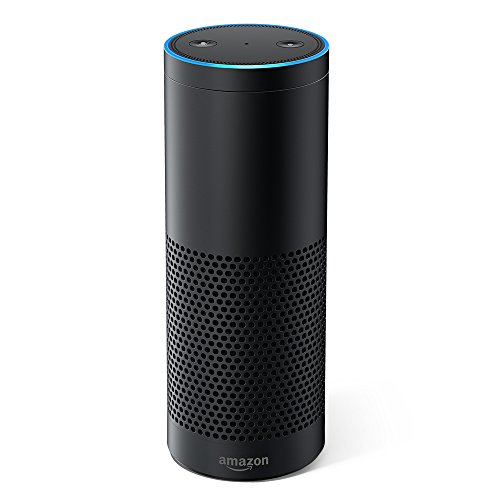
OK Google, we really should applaud smart speakers and buy everyone one for Christmas.  ‘Cos when it comes to using those, people are far more likely to ask Alexa to play a radio station than any other form of comparable audio entertainment (58% of device eartime). On i-pads and smart phones, folk are much more likely to get up to all sorts. 

Although it accounts for but a pint-sized proportion of radio listening time and by currently just 1.1% of adults - there is something hugely encouraging about the love affair between radio and smart speakers. The biggest - and most distinctive - radio brands will win - and current radio operators may or may not be running those. Analyst firm OVUM suggests 40% of homes will be 'smart' by 2021.

Radio remains a one to one medium. 51% of all adults suggest they listen to radio on their own, with 20% saying they listen with their partner.  Amongst the less -coupled 15-24s, there are a wider variety of possibilities -  just 43% listen alone, but 11% with families and 32% with colleagues

In-car listening is interesting. MIDAS suggests that whilst a majority of adults will choose to listen in on the move (57% reach), the share of listening attributed to those travellers is much less than columnists might expect, being outshone by the amount of time people listen whilst working or studying.  I often wonder whether we programmers take into account sufficiently when our light and heavy listeners are most likely to be with us.

Overall, MIDAS suggests, if you picture your listener serving an angry customer, reading a physics text book, driving to Ingoldmells, eating a microwave meal, scrubbing the grill pan or just chilling – then you’ve accounted for about 90% of all listening.  The column headings indicate, however, no-one has sex whilst listening to the radio. Most off-putting if it's your own voice-tracked show.

All data MIDAS, RAJAR/IpsosMori September 2017 unless otherwise stated.


Grab my book 'Radio Moments': 50 years of radio - life on the inside. A personal and frighteningly candid reflection on life in radio now and then. The drama - the characters - the headaches - the victories.


Also 'How to Make Great Radio'. Techniques for today's presenters and producers.  Great for newcomers - and food for thought if you've been doing it years.


Monday, 7 September 2015

An Open BBC For the Internet Age

S
Reith did not invent the phrase ‘inform, educate, entertain’, I learnt from today's BBC's Charter review proposal document.  I really like facts like that.

No, it was clever old David Sarnoff, the founder of commercial radio in the US. He wrote that its function was “entertaining, informing and educating the nation”. The report then goes on to point out mischievously that “Reith can take credit only for re-ordering the three and, characteristically, turning them into imperatives”. I want to have a drink with the person who wrote that impish sentence on page 77 of this 99 page document.

Like Reith, I shall not trouble myself too much with matters television.  On radio, the report is distinctly obsessed with 'distinctiveness'. It understandably labours the point that "all BBC radio services are distinctive and some are unique".  “To break hits, they have to remain popular stations— otherwise fewer people would be exposed to those new songs.” It seeks to define distinctiveness with some success. I like to dress distinctively, but I still wear a pair of jeans and a casual shirt most of the time.  

A little like the debate about immigration statistics, one can argue about the music differentiation figures cited in the report, as it compares Capital's 398 tracks in a month with Radio 1’s 3868. Commercial radio clock hours have about 22% fewer content minutes than the BBC's; and the Radio 1 figures include the impressive off-peak specialist shows.  But we know the point.  Both stations are right to be doing what they do.

The overlap comparisons also pit Radio 2 against Absolute.  Putting to one side the irony of using a diagrammatic approach which mirrors Absolute Radio’s canny comparemyradio.com  site, the figures suggest Absolute spins 1598 tracks, compared with Radio 2’s 4423. Different every time you listen.

The Government’s Green paper question about the level of overlap between Radio 1 and 2 is addressed.  The loopy civil servant who suggested that was presumably still under the impression that Radio 1 and 2 still simulcast the David Hamilton afternoon show.  Radio 1 shares just 6% of music tracks with Radio 2; and Radio 2 shares 5% of tracks with Radio 1, is the report’s understandably huffy retort. Just 13% of the combined Radio 1 and Radio 2 audience listen to both stations.

I’d be a little annoyed if I were David Holdsworth (and I’d love to be him, actually), as the report announces that local radio audiences are declining, in a way they do not malign 5 Live’s current audience levels. 

58% of BBC Local listeners are aged over 55, boasts the report. If I’d have written the report, I would have pulled off the 50+ figure, given that’s what its licence demands it serves: it would have made a more favourable graph. (Interesting though, that poor old Ben Cooper is scowled at in the BH lift by the man from the Trust for Radio 1’s poor showing amongst surly 15-24 year olds (40%), yet BBC local radio (UK) has just a 21% reach amongst 55+. And Radio 1 attracts 15% of 45-54s compared to BBC Local's princely 16%).


The report recognizes that your once proud local rag may now be a weekly free-sheet in which press releases are conscientiously pasted:  “on current trends the BBC could become the only traditional news provider in some areas—so to avoid that, we propose to open up our spending to support local newspapers and others.  …. the BBC would allocate licence fee funding to invest in a service that reports on councils, courts and public services in towns and cities across the UK. The aim is to put in place a network of 100 public service reporters across the country. Reporting would be available to the BBC but also, critically, to all reputable news organisations.” That’s a brave suggestion; and will not appeal to those journalists who get their legal highs from being first with a story, but it’s tasty food for thought. 

On the other hand, “local newspapers would be invited to provide BBC local services”. That must generate the suspicion that BBC local radio in the future could be run very differently from how it is now – and I have long been an advocate of giving the over-generous BBC local radio budget to a talented team and let them get on with creating a great truly local listener-focused radio station with a clear remit, away from the BBC burden.

There is praise too for ‘BBC Introducing’ on BBC Local Radio. Rightly so too.  It’s a great effort across the country, and I suspect that Dean Jackson on BBC Radio Nottingham (who deserves far more recognition than he ever gets) is responsible for a fair number of the 30 acts discovered this year.  I confess I often wonder whether this show is an uneasy tenant in its current home, rented from the 50+ targeted BBC Local Radio. But there is no doubt this project should have a conspicuous, fitting and maybe enhanced place in the BBC fold.

What of 5 live? Well, it covers 51 sports.  Do 51 sports even exist? I’m tempted to invent another and then complain to the Trust about under-representation. “5live’s sports output has never been broader” trumpets the report, forgetting the fact that its audiences are not really at a height.  Maybe there’s a connection. 

As someone who has little interest in any of the 51, I do not have the passion for 5 Live I once had. Sport and news are probably only linked in media-land because they both comprise the spoken word.  They are uneasy bedfellows. It is a puzzle to me that the BBC does not have a proper rolling news service.  If this country goes to war at 7.00 one night, Radio 4 And 5 Live listeners will continue pruning their roses blissfully unaware, distracted by Alan Green’s enthusiastic commentary or Brian Aldridge whinging. Frankly, I’d create a new AM and DAB radio channel, simply simulcasting the audio of the BBC TV news channel. If the BBC is thinking more radically about repurposing content for various platforms to exploit its differing usages, as it argues in this report, then they can borrow that idea if they wish.

There is mention, in a broader context, of “a transition from rolling news to streaming news”; and one wonders just how long it will be before some real-time linear channels become on-demand programme strands.  Whilst there’s a ready appetite for Radio 4’s news programmes, I have to confess my injection of 'You and Yours' and 'More or Less' are always from the iPlayer. Winifred Robinson is a dish best served cold. Could that be another way, in due course, to reclaim a network for a rolling news radio channel, and conclude Radio 4’s dilemma of likely audience size versus place on the daily schedule for particularly distinctive content. 

Maybe I’m wrong. Maybe it is ‘rolling content’ which will disappear first.  Maybe we just want links on social media to  content about ‘stuff happening now’ which we can select at will.  There’s a hint of that in the report.

The growth for BBC radio digital growth looks impressive, but it’s maybe churlish of me to argue that there were only around half a million DAB receivers in the UK when the graph's x-axis began in 2003. 

The BBC has a hundred years of radio content sitting around on shellac discs, C90s and USB sticks that my dad and I have paid for (He was born six years before the Corporation began). We want to hear it.  As a bit of a radio historian, I am frustrated that so little exists online, although the Genome and similar efforts are laudable. There’s a halfhearted ‘not now updated’ archive site too.  I’m glad that the BBC seems poised to open up its content to its shareholders, whether anoraks like me, or more simple folk who want to interrogate a more useful genuine subject.

“Bringing together what the BBC does across arts, culture, science, history and ideas and add to it work done by many of this country’s most respected arts, culture and intellectual institutions. It would also make the most of the BBC’s rich archive heritage— from speech radio to our television collections—and open it up for others. For curious audiences around the world, the BBC would create and manage an online platform that, working with partners, would provide the gold standard in accuracy, breadth, depth, debate and revelation. It would offer audiences the thrill of discovery and the reassurance of reliability.”   Good stuff, Tone.

There’s justifiable praise for the BBC World Service as “the UK’s most important cultural export’.  Those who moan about us ‘having to fund radio in other bloody countries’ conveniently forget that this thing probably pays for itself over and over again in the long term, in human as well as commercial terms for brand UK. It's fitting too that the BBC funds it.  After all, back in 1929, the Treasury and the Post Office  kept 36% of the Licence Fee.  

This solid, thick pipe of income is a huge privilege, and we need to know it is spent wisely.

This report is an impressive piece of work and a good starting point. There’s some blunt pride from an organization which is often too quick to apologise when it should stand its ground; there is some fresh thinking and ambition; and there is a recognition that the BBC future will be different from the past. Let’s, please, just make sure we hang on to the right bits. 


Wednesday, 12 August 2015

An Old-fashioned Plea

My old man is 94. He loves his mobile phone and his iPad;  and merrily plays Olly Murs loudly from YouTube. He banks online.  He's not old-fashioned. And he says he doesn't feel old.

Whilst he likes Olly and Leona Lewis; he also enjoys Doris Day and the harmonies of the Beach Boys.  Whilst he talks readily about iTunes passwords, he also remembers the reg numbers of his old Ford Capri.  He likes Sam & Amy on Gem 106; and talks about Radio Luxembourg. Before his sight caught up with him, he relished this week's adulterous Coronation Street as much as old sepia episodes of Upstairs Downstairs.

BBC Local Radio rightly does not not want to sound 'old-fashioned'.  It is crucial, however, that it fully acknowledges the tastes and interests of an older audience. Those two objectives are mutually compatible. At a time when the BBC calmly considers how to revive the BBC Local audience, I do hope it does not mistake relating to an older audience for being old-fashioned. Playing more current songs and introducing more contemporary talk topics is not the way to a happier Rajar day.

BBC local listeners do not want a stuffy, dated, dull service; yet they do want content which relates to people like them.  In the outside world, fifty-somethings will find the greatest pleasure knocking about with friends their own age. Their life span and cultural references will co-incide; and they will share the same language, the same memories, the same smiles. They share the same country.

They certainly will not feel old; they may have ambitions and things they still wish to achieve - and a healthy interest in the here and now.  But they will also have the benefit of boasting a lifetime of memories and experiences from which to draw. They will likely have settled in a place they call home and started to take an interest in how it has changed around them.  They will care about things which a twenty-something would not; and they won't be too concerned about the youthful twaddle causing grief for that twenty-something.

Given BBC Local Radio provides the first step for many broadcasters, one can look around many stations and see rather more fresh, young faces on the coal-face than seasoned presenters and producers. Some of them likely know the area less well and won't hang around too long before they are whisked off on some exciting attachment. I do not recall the DG standing up in BH and announcing targets to encourage a workforce which reflects the demographics of BBC Local Radio's audience. Yet is not a daytime line-up of twenty-somethings as perverse as a Radio 1 line up of sixty-somethings? Radio hosted by someone over 50 can still excite. 

This must pose a challenge for BBC Local Radio. It is often through these young faces that the content funnel operates on a daily basis.  These promising, intelligent young staffers are charged with ascertaining whether or not the death of a celebrity unknown to their generation is news or not - and pronouncing their name properly. They are charged with answering the phones to people often thirty or forty years older than them and trying to establish the worth of that caller's topic.  And, on-air, those young broadcasters face the challenge of bantering with someone old enough to be their mother or grandmother, likely missing the nuances and opportunities for interest and entertainment.

An old person can remember what youth is like, a young person may never know how maturity feels. 

As a fledgling broadcaster, I recall trying not to give away my age to the listeners. They were generally about 30, I was 19. Painfully aware of the gap, I did my best  to focus the content appropriately; and was pleasantly delighted when listeners looked shocked at my acne when they met me. I'm not sure I could have managed to bridge any greater a gap.  If you can; you're very good. Grown-ups don't want to be spoken to like kids.

I worry about the focus of some BBC locals. Love songs and romantic messages really don't work as they do on younger formats. Topics of 'who did you have on you bedroom wall' are best not kicked off by a presenter monologue about their New Kids on the Block poster.

50+ listeners are not as obsessed with Twitter as twenty-somethings: only 6% of 55+ are 'hooked on social media'. 90% of 55+ do not regard  the smartphone as the most important way of using the internet; but they will smile when you mention the days of having to rely on just just a single phone hard-wired into their cold hallway. Well over half of 50+ do not bother with a social media profile of any sort: they know what they are, they're just not as obsessed*. They will likely love the satellite TV choice now available, but it won't seem two minutes since it was a choice of watching BBC1 or 'the other side'.

50+ listeners do not share the presenter's enthusiastic schoolday memories when they hear a song from the 1990s.  They feel that the 1980s seems actually quite recent.  The most recently a 50+ slipped their 'first record' delicately out of its sleeve was likely 1978. For the majority of the audience, it was much, much longer ago.

Great radio is relatable - and relatability is about identifying and sharing common ground.

And, notwithstanding the BBC's laudable intentions with the excellent Make It Digital Traineeship, I'm not altogether sure why their local stations are being asked to carry trails aimed specifically at 16-24s.

Whilst news bulletins on these local services will rightly be a little broader in their appeal, does the newsroom really attach due importance to the likely audience as it determines the news agenda for bulletins and the speech-heavy shows?  Does it pause to review material in the context of someone born in the 1960s and before? I can hear the local filter on-air with enviable excellence; I am sometimes unsure if I can hear the demographic one. Listeners are unlikely to be taking GCSEs or even still to have young children themselves. They are hugely more likely to own their own homes rather than rent; and the vast majority will have paid off their mortgages. They may well be pleased when house prices and interest rates rise.

It's just a matter of about thinking about life from the perspective of a fifty and sixty-something. That does not make it old-fashioned - it just makes it right. 

BBC Local Radio is quietly huge, with an audience in England of just under 7m mega-loyal listeners, almost the same reach as the mighty Capital network.  It's rarely top of mind, however, not least because, for a variety of reasons, its profile is low in the cities where decision-makers live: London, Birmingham & Manchester. It deserves the bit of love it is now being afforded. 

50+ is sadly unlikely to be a sustainable place for much commercial radio, so we must rely on the BBC to put its arm around the 19m people in the UK aged over 55, with the energy and focus with which the impressive Ben Cooper is attacking the 15-29s on Radio 1.

If the BBC hired sufficient gifted communicators of the right vintage, and a few folk who've 'lived' to handle the incoming calls - these stations will generate the 'warmth, personality and interaction' which David Holdsworth wisely seeks.


My book 'How To Make Great Radio' is out now from Biteback. 
Proceeds to the Radio Academy.


Friday, 17 July 2015

Mug or a sticker?

It's the only mug I never drink out of. Such happy red and blue adolescent memories, brought back by the best radio logo in the World. The Radio 1 Thunderbirds logo.  To me, that earthenware mug is worth more than a piece of Clarice Cliff.

Not all radio station merchandising ends up being quite as precious. There was much excitement when Graham Knight, presenter of the then compulsory lunchtime magazine programme at Radio Trent, took delivery of his merchandising.  Gaudy, cheap, purple pens had been ordered, inscribed with the name of his programme 'Trent Topic'.

As Graham  opened the big box, his face fell as he realised the printers, less familiar with the programming demands of the IBA, had printed 'Trent Tropic' instead.  The pens were never sent back to whichever country had printed them; I think we gave them away on the programme one fortunate hot day in what must have seemed like an immaculately planned Summery contest. 

Radio stations loved merchandising. Back then it seemed cool to show the world which station you listened to.  Some individuals would happily live their lives wearing a branded T shirt or sweat shirt.

Pic courtesy of David Smith (Simon Parry)
On acquiring the old Centre Radio premises from the liquidators, the eager marketing manager at its replacement, Leicester Sound, scratched his head on what to do with a million T shirts bearing the name of the station's ill-fated predecessor.  Probably over a drink at the nearby Marquis, the idea was hatched to overprint each with the new logo and word 'recycled' .  An idea ahead of its time, actually.

Leicester Sound loved its merchandise.  We had sweet little teddy bears with logos on their chests; and long promos on-air boasted their merits.  Wonderful Wendy on reception also sold branded, baggy boxer shorts.  These were the Nick Kamen days when baggy was in. They were available in small, medium and large; although a surfeit of the latter appeared to be sold to most of the visiting listeners, as I recall. With male and female options in stock, Wendy would ask whether they sought ones with an opening - or without.  

Thinking back, in those days, Leicester Sound probably earned more from merchandising than the radio business. Mind you, they were tough days for the medium. Profits from the Coke machine even helped. For most stations though, despite the best of intentions, merchandising stock attracts dust and bills. The size of the order inversely proportional to the likelihood of the presenter or station name/logo remaining sufficiently long.

Mouse mats went through a phase of popularity; as did baseball hats and furry bugs. James Cridland reminds me that Viking in Hull offered skimpy knickers bearing the station's mascot 'Eric the Viking', until the idea failed to find favour with the station's new owners. And the there were the Pennine radio rain-hoods for those rainy Bradford days. 

Mugs have been the great survivor. Some stations still have them. You cannot not find  a mug useful. It always has value. Some stations, however, would be well advised to seek advice on the design and wording before pressing send on their order; especially BBC local stations.

Car stickers too endure. Some stations, again, seem tempted to devise creative designs which can only be seen as you crash into the car in front.


In fact, all these years on, everything has changed about our medium: technology; ownership; brand names; music; presenters; regulator; and ownership. The only constants are arguably just those mugs and stickers.  

Do let me have a pic of your favourite example of station merchandising.Just for fun, of course.
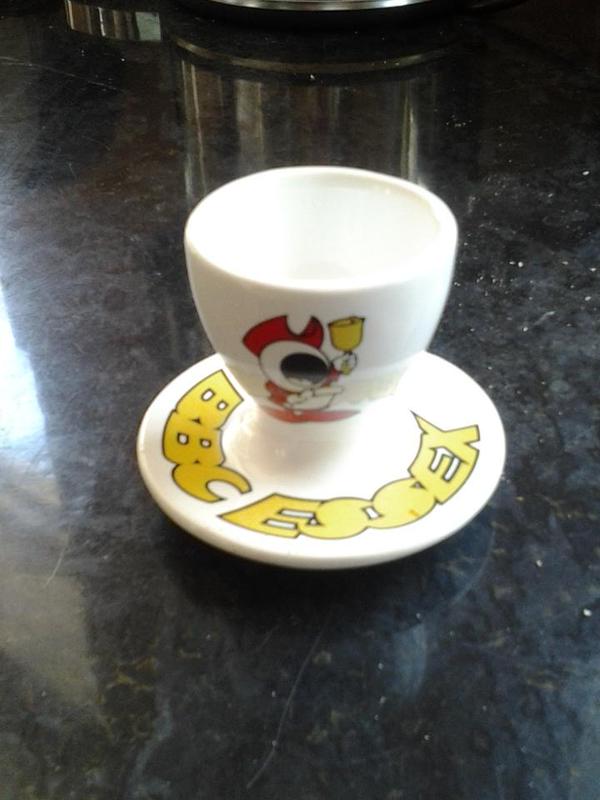
BBC Essex egg cup, thanks to Phil Shieber


My book, 'How to Make Great Radio' is out now, published by Biteback.

Stickers from Paul Teague
Memorable, huh?

Happy '60s BBC local days
Eggy fun from BBC WM, thanks to David Butler
Good grief. 

Do Tweet more of these to me @davidlloydradio

Sunday, 12 July 2015

Sounds Like You Want to Hear - 40 years on

Reunions are awful things. Bumping into people you'd rather not see again; people you barely recognise; and acknowledging that you really are as old  as everyone else is.

The 40th anniversary celebrations of the first tranche ofcommercial stations are well underway. I gather the LBC celebrations in 2013 went off with a bang; the old Metro, Hallam and Piccadilly crowds really enjoyed themselves; and just a few weeks ago the, old Radio Tees (Tfm) crowd toasted four decades since Les Ross lifted the arm on the turntable for the very first time.

Last weekend saw the 40th anniversary of commercial radio in Nottingham. Radio Trent was the 13th in the list of stations celebrating those forty changing years. 

We were privileged to be allowed to take over the old premises on Castle Gate for the night, thanks to the wonderful co-operation of its current occupants, Base 51/NGY. (@Base51) They manage an impressive new centre for young people in the city, housed in this lovingly restored historic building.  The old car park, home of so many arguments in Trent's day, when presenters would rush up during a two minute oldie to shift their vehicle so the OB Land Rover could escape, has become a surprisingly attractive patio where generations of  the old Trent guard could assemble in the early evening July sunshine.

Ron Coles, who, as MD, nursed the station through its mid-life crises, stood to relay messages from those who could not attend; and Nick Shaw paid tribute to all those who had gone to work in what must now be a very great radio station in the sky, including his dear brother, John.

In a bizarre twist, the new venture now houses Notts YMCA radio/audio (@YMCA_digital) facilities in its basement, so in some senses the old subterranean studios have been restored to their seventies purpose. The breeze block studio walls remain, and even the old sealed window through to the old MCR 'control room'.  John Peters, first voice on-air, stared at his reflection, aged 24, in the glass.

A drink or two had been consumed by the time guided trips around the building began, so emotions were high as the Trent team revisited the scenes of their crimes.  Newsreader, Tim Heeley, drew up a chair in what would have been the newsbooth to deliver a familiar, reassuring late night bulletin, as he had most nights in the 80s.

How brilliant it was to shake hands once again and trade memories with  the journalists, the presenters, the sales people, the traffic team, the creative producers and accounts staff who had captained the old station through its colourful past.  I tingled when I met the characters I'd grown up listening to, whose voices were the reason I worked in radio.

All generations were represented, from the smiling pioneers right through to a welcome smattering of the current Capital crowd, including  Dino & Pete from breakfast who were welcomed as inheritors of the 96.2 crown.  They represented today's necessarily efficient, focused radio stations, which now together deliver significantly greater audiences to East Midlands' commercial radio than we battled for in the vintage, vinyl days.

Returning to our old home was a little like one of those odd dreams where random people from your life gather in an impossible location.  Or being treated to an opportunity to step back in time, and continue, in loco, the conversations which had been severed some decades before.

As we cleared up the venue late that night and restored the venue to its new purpose after a beautiful emotional journey, we slotted our  memories back in their rightful place at the back of our minds.  The old logos, the old jingles, the old pics returned to their cardboard boxes too, like Christmas decorations on the twelfth night. The reminiscences  are over for now. 

Meanwhile, for all those lucky enough to still be working in this great medium and still as excited as ever, let's set out to create some more great times we can, one day, also look back on with similar huge enthusiasm.

Saturday, 16 May 2015

A blog about a book: 'How to Make Great Radio'

Over dinner in my favourite Indian restaurant in Nottingham recently, I was rambling intolerably about 'my book' to one of my cynical but lovely radio friends.  I told him I'd learned loads whilst writing it. '"What like?", he asked, as he stuffed a naan bread in his face.

So, when the Jiffy bag finally arrived from the publishers last week, bearing ten lovely-smelling first copies of my humble publication, I thumbed gingerly through the pages, to remind myself what I hadn't known when I started to write it.

Every day in radio is a school day, not least when you're trying madly to justify, or disprove, those 'radio assumptions'.

I thought I was the only competition cynic until I stumbled across the words of legendary American programmer, Bill Drake: "We did a lot of on-air promotions at KHJ, and we did almost none at KFRC in San Francisco. Both stations were successful". In his opinion, "most contests are garbage".  He's surely right; far too many offer little in the way of witness value. They are either too demanding, too dull or too exclusive; with prizes seen as unattainable and mechanics focused on the minority taking part, not the majority listening.  Gone are the days when the radio station was the only place you could win a decent prize.  BBC Local Radio, which suspended contesting in the days when it was discredited, would likely concede that their stations are better without  many of them.  Cheers, Bill. Nice to stumble across substantiation for my prejudice.


Isn't it annoying when 'major names' pop up on radio who fail to grasp the 'one listener' thing.  That 'You' thing.  They drone on about "anyone out there'" and getting my 'thinking caps' on.  For goodness sake, anyone who knows anything about our great medium knows that the most important word is 'you'.  If it's good enough for Ken Bruce: 'People respond to one person – talking to them as one person’; and Wogan: ‘Radio engages because you talk to an individual’, it should be good enough for the rest of us. I also cite some early crackly recordings from the 'first' disc jockey, Christopher Stone, from 1927 who said in his show: 'I know you'd like to hear some more of that, and so would I".  Almost a century ago, and at the very beginnings of our medium, he'd nailed it.

Few candidates in the last General Election stood up to make a speech without offering an anecdote about the chap they'd 'bumped into' the night before.  We know that story-telling works.  The greatest presenters master the art on radio.  The greatest ads call upon it.  Vocabulary, pace and detail create colourful pictures.  In researching the book too, I was drawn too to the words of John Cleese, who spoke of the mental 'skip' the listener makes from the start of a tale to the punchline.  In that skip lies the pleasure and amusement. Too large, it fails, Too small it offers no satisfaction.  One word can make a difference.  Even if just a  swear-word: ‘You were only supposed to blow the bloody doors off!’

Why do some newsreaders whine every sentence and inexplicably draw out the last word, regardless of its significance?  Accomplished voice coach, Kate Lee, suggests that great reading is often about ‘sounding even more yourself ’. She observes how some readers appear almost intimidated by the importance of the material. Once they say to themselves ‘this is news’, she believes their brain then promptly ignores all all the natural nuances of conversation. Contemporary, conversational news delivery is a real art.

Fascinated by the way the 'mood' in a studio can change what comes out the speakers the other end, it was great to hear the anecdote about a leading performer who used to play the Cagney & Lacey theme tune before starting his show.  Off on that tangent, I then stumbled across how both David Cameron, and indeed Enoch Powell in his time, observed that a full bladder kept their mind alert and their speeches powerful.  Maybe not one to try.

I stumbled across some fascinating material about the voice and how it engages so well on radio.  Including the theory that the 'disembodied voice' on the radio connects with the listener as does a mother's voice to a child in the womb.


And who would not want to know the story of the birth of tight, Top 40 format radio in a bar in Omaha, Nebraska.  Next time one of your listeners complains about hearing the same song over and over again, you'll want to know that tale too. 

And so the list goes on.  I learned a little more about mic technique; commentary; interviewing; the psychological response to words; and getting callers on-air.  I mused about dealing with over-enthusiastic listeners; spoke to some great producers; and delved into the use of social media.  I stumbled across some brilliant old research about the relative merits of male and female voices; and I counted the words per minute which Wogan deployed as he said his last breakfast farewell. 

I was persuaded to add a chapter about how to get into our medium; and I volunteered another about how to keep your job.  And some necessary caution on risk-taking, 'stunting', research, law and compliance.

Given that text books are boring and the chances of any publisher agreeing to my autobiography are slim, I've littered the book with anecdotes from my lucky time in the business.  Lest I forget the two occasions when the police have called into reception; Dale Winton's interview techniques; or the words of advice Mrs. Thatcher's daughter proffered on programme preparation.

And there's the chapter about teasing.

As every 'author' will understand, the awful thing about writing a book is that the second your work is despatched to the publisher, you think of something you should have included. Plus, last Autumn, no-one new what Perisope was. Things now change by the day in our great radio world.

Many thanks to the likes of Matthew Bannister, Christian O'Connell, John Myers, Ben Cooper and Nick Ferrari for offering generous early reviews.  What's useful is that they suggest it's by no means just a book for beginners. 

Radio is rarely a matter and wrong. Some of the greats break the rules brilliantly.  And those who disagree with my mad assertions or theories will hopefully concede that the debate itself is likely helpful. Or they can write their own book.

If it helps, please grab a copy at £14.99 (£10.99 e-book) from my friends at Biteback Publishing.  Proceeds to the Radio Academy. 


Saturday, 13 September 2014

The best radio is a simple one

I was delighted when RadioPlayer's talented Mike Hill stoodup at the Next Radio conference, armed with a yummy cake his wife had baked for him, to illustrate how complicated the current generation of radios are.  He said what I had thought for some time; but expressed it better.

Radios are getting too complicated.

Having collected radio sets over the ears, it's easy to glance at the shelves and draw ready comparisons.   I adore those early 'solid state' transistor sets.  Most boasted an on-off button, a tuning dial and a volume control.  Some clever ones combined the volume control with the on-off button. Remember that satisfying click as you turned it on and cranked up the sound. It was a simple life

Now they are all just too awkward. Both in and out of cars. 

My DAB set in my new BMW  invites me first to choose between FM, AM, DAB/DMB and, erm, 'sound'.  I suspect few in our business know too much about DMB, let alone normal folk.  Then I choose DAB, to be treated to a list of 'ensembles'.  What does a listener make of these?  

When they wade in, do they know what D1 National is?

If I venture to the 'help' option, lo, the relevant page of the instruction manual which talks of 'bouquets'. Ensembles. Bouquets. Who cares.

And when I drive away from the reception area of any multiplex, its station list remains.  A handy list of stations I cannot receive.  Sometimes, I have the luxury of choosing between the same station on two adjacent multiplexes, but if I choose the weaker one, it does not trouble to hop across  to the better one.

Don't get me started on how to turn off the RDS traffic announcements.  No, I do not want to hear there are hold ups in Surrey, when I'm in Nottingham.  I never did. No-one has ever said to me in any focus group ever that RDS travel flags are useful.  Stop inventing things we don't need.

Back home, I think I've bought just about every DAB set that's ever been made.  Too many seem to me to have a life span of two or three years before the transformer gives up or another bit of it decides it's feeling ill. Frankly, who can blame it. 

My favourite 1968 Roberts is still working fine.  My rather newer Colourstream Roberts FM/DAB/internet  is not.  It claims to have touch screen technology, yet that long ago stopped responding to my crusty finger.  I'd need nails the size of a dainty princess to be able to make sure I press on the right bits.  And you can only use the online stations, naturally, when you have managed to marry it to your Wifi, which is again a full time fiddly job.  Arrows back to previous menus. I'm lost.

It was eminently sensible to have radios which can receive streaming stations as well as FM and AM. But they are horrendously complicated. The design of the Pure Sensia is stunning, but operating it drives me to distraction.

Even having to wait for DAB radios to come on annoys me. I'm easily annoyed.  In the morning, I press 'on' and it stubbornly has a good old yawn and stretch before it saunters into action. I thought waiting for a radio to warm up was a ritual from the valve age. Ovaltine anyone?

My dad's talking Pure radio is a boon.  Press the handle and it tells you he is listening to Gem 106. Actually it doesn't.  It tells him he's listening to Century. It clearly has a fundamental objection to rebrands

The DAB set in my kitchen almost works. Provided I extend the aerial so it pokes out the eye of anyone wandering into the sitting room.

Mike produced a box which did what we wanted it to do. You find a station easily by name on search, and it delivers it to you by DAB, FM or online, dependent on which appears most satisfactory. That's all we want.

This is a worrying time for radio.  We have lost the bedside war, as glowing alarm clock radios have suffered the same fate as the TeasMade (ask your granny). Now the dashboard is at risk.  Having enjoyed pride of place in the dashboard since the 60s, access to radio is at risk now of being hidden away. If it can be received at all. If we lose both the wake up and driving moments, there's a risk radio itself is in peril.

I'm proud of the early work by Pure on DAB, with some brilliant pioneering sets; and Roberts too responded well. Having stations available by name was indeed a step ahead of the old frequency numbers. But in the days of Fabulous 208, we could just about remember those digits and which stations were AM and FM.  Now there are more stations, and growing listener repertoires.  We want one set of pre-sets which locks onto stations regardless of platform.

Stop asking me questions.  I don't have to choose which power station my electricity is coming from; I have a similar level of disinterest in how my radio station is getting to me. FM, DAB, online. Just let me listen.


The beauty of radio in general terms is its simplicity. Someone else is selecting the news stories and songs for me. That's why I like it.  Don't make just turning it on a full time job.

Tesco 2014. 16 of these sets did not receive DAB
If radio is to survive, we need instinctive technology on radio sets and in cars.  Simple is best. Choose your station, turn it up or down.  Sorted.

What can radio learn from how it has handled COVID 19?

In times like this, you turn to your friends. And radio is a friend. Day or night, it’s there to pick-you up, to comfort you, to explai...