Showing posts with label digital. Show all posts

Monday, 16 July 2018

How Indignant May Eddie Mair be on Commercial Radio?


As Eddie Mair slides off his sticky BBC headphones for the last time and hands over his lanyard, what will he be thinking?

With due respect to his many accomplished colleagues who have hosted PM frequently and excellently, it is Eddie who has defined the immaculate style of the programme in recent years. Even when he enjoys a scheduled day off, one can still hear his ghostly shadow in the cue-writing.

In his Radio Times column he just said it’s time for a change – and insists it is nothing to do with the various BBC pay issues. One imagines he has grumbled over the years as much as anyone about Auntie’s weird ways – and also loved her for a million more reasons.

Now, LBC calls - and Eddie appears content to be associated with it.

It is a huge tribute to Global Radio for building LBC into the respected titan it is today. Although one imagines the company’s FD still scratches his head about the costs and revenues, thankfully the music brands are sufficiently successful for the parent company to regard the station as something which has a broader value beyond specific profits.

As Eddie falls into his pristine silver LBC chair and assumes presidency of the station’s telegenic main studio, he will know that for the first time, the BBC editorial guidelines may be forgotten. Ofcom alone will now rule.

Will that make a difference?  Eddie will determine his LBC persona and he may stay just as he is. After all, there has always been a real authenticity about his presentation. That’s why listeners liked him: they felt they knew who he was. 

But one felt he was maybe just straining at the leash – getting away with mischief with a glint in his eye. On LBC, the leash is off and Eddie can go running into the adjacent field and chase the sheep - should he wish. We know that LBC likes its presenters to stand for something - and expends some degree of effort in squeezing the BBC-ness out of some prospective recruits.


How different are the rules?

The BBC requires that “due impartiality...and...a breadth and diversity of opinion...so that no significant strand of thought is knowingly unreflected or under-represented....fair and open-minded when examining evidence and weighing material facts".

Furthermore,not influenced by outside interests, political or commercial pressures, or any personal interests”. “Our output will be based on fairness, openness, honesty and straight dealing.  Contributors and audiences will be treated with respect."

The BBC even goes beyond what the Charter requires – requiring due impartiality to all subjects. Not just matters of public policy or political or industrial controversy, but controversy within religion, science, finance, culture, ethics and the like.

In news itself – the rules remain familiar across BBC guidelines and Ofcom’s Code. Both the BBC and Ofcom require that “News in whatever form must be treated with due impartiality”. The word ‘due’ is scattered across all broadcasting rules, meaning not necessarily equal proportions but 'due weight' – so minority views are not necessarily afforded equal weight to the prevailing consensus.

The BBC requires “a breadth and diversity of opinion...fair and open-minded when examining the evidence and weighing material facts".  Furthermore, ”audience responses should not be given a wider significance than they merit and we should take care not to misrepresent the relative weight of opinions expressed...appropriate scrutiny to audience opinions and ensure that the debate does not appear closed to members of the audience who support a minority view”.

There is specific provision in the BBC guidelines about highly controversial ‘major matters’, where the different perspectives are more rigidly implemented, as there are in the Ofcom Code.

What of the individuals? The BBC worries not only about reality – but about “perception”.  "Our audiences should not be able to tell...the personal prejudices of our journalists or news and current affairs presenters on matters of public policy, political or industrial controversy, or on 'controversial subjects'".  They may provide evidence-based judgements, but not personal views, including online. "The public expression by staff and presenters of personal offence or indignation risks jeopardising the BBC's impartiality."

So. It's official. Eddie may now be as indignant as he fancies.

Little wonder how liberated Robin 'The World Tonight' Lustig felt as he left the BBC "When I started writing my post BBC-blog, I discovered the angrier I sounded, the more widely read my blogposts were".

BBC programmes are additionally covered by much of the Ofcom Code too, so the below will always have been in place for Eddie - but now, they are the sole requirements.

Whilst the BBC is petrified about ‘perception’ of bias any personal presenter interest may generate, Ofcom simply demands that the presenter tells us the score. "Any personal interest of a reporter or presenter, which would call into question the due impartiality of the programme, must be made clear to the audience.” No-one is misled about Farage’s perspective.

“A personal view...programme...must be clearly signalled to the  audience at the outset”. Ofcom adds helpfully: "(Personality phone-in hosts on radio are exempted from this provision unless their personal view status is unclear)"  

I guess, therefore, if Eddie is to adopt a stance on things, he needs to make his status clear pretty swiftly.  I can rustle up some idents if he wants any fitting sweepers: “Eddie’s a raving leftie/rightie/liberal who favours soft/hard/no Brexit and supports/hates/not really bothered  about another Heathrow runway”.

Ofcom requires that “no politician may be used as a newsreader, interviewer or reporter in any news programmes unless, exceptionally, it is editorially justified". In that case, "the political allegiance of that person must be made clear to the audience”.

Due impartiality outside news bulletins is the biggie. Ofcom requires** that "due impartiality on matters of political or industrial controversy and matters relating to current public policy" be preserved "within a programme or over a series of programmes".

Under Ofcom, “presenters of “personal view” programmes may “express their own views on matters of political or industrial controversy or matters relating to current public policy”. However, “alternative viewpoints must be adequately represented either in the programme, or in a series of programmes taken as a whole”.

Additionally, “presenters must not use the advantage of regular appearances to promote their views in a way that compromises the requirement for due impartiality. Presenter phone-ins must encourage and must not exclude alternative views”.

LBC does all this with distinction. Not only are there clear differences across the schedule in tone and approach, a wealth of views are heard within, often lending powerful and personal insight. Some idiot tweeted me suggesting that James O’Brien’s producers filter the callers so that no contrasting views are heard.  If only they saw the smile on a presenter’s face when a caller spits blood about what's been said.

LBC treads a careful path and has famously recruited a rainbow of politicians to present programmes. When programmer Martin Campbell was at Talk Radio UK in the 90s, and I was a regulator, he was keen to do much the same there, although LBC has developed the policy with aplomb – seizing the headlines and creating compelling radio. It has not descended into a succession of shouty right wing hosts, as in other countries. The approach is unique and beautifully British.

The BBC demands "respect" of contributors. That word is not in the Ofcom Code. Contributors to commercial radio do have a right to fairness - to know what's expected, the context, the general topic and the like - but not your actual full-blown "respect".  If Eddie wants to say "Boris Johnson, you're a nasty piece of work" he can. Not that anyone stopped him saying it before on the BBC, in that delicious way of his.

One imagines Eddie's regular listeners, having discovered how to re-tune their radiogram, may be in for a shock or two, though, and Ofcom may have to cancel all holidays.

Overall, there are differences - principally in how free Eddie can be in having his own stance - and to express himself more in other media - but it's more about authenticity than bias.

Rules aside, a rich layer of Corporation caution gilds the BBC guidelines, contrasting  with LBC's agility and challenger nature - a position they manage brilliantly.

I hope we hear more of his humour on LBC - and I hope he gives something more of himself. We know just enough about James O'Brien and Nick Ferrari to care about them, but Eddie has traditionally not wanted to say very much about what makes him tick - and I'm curious. From his book, I know he is not a fan of radio awards, worries about technology and made Doris Day cry.

It will be fascinating to hear him unbridled. His style and tone will likely evolve and six months on, he will sound different from Day One. But one expects that even at this moment - as he mops his brow and titivates his herbaceous border - he's jotting down clever asides he's been dying to say for years.

** I have taken LBC to be a national digital sound  programme service, not a local service


I work with radio stations around the world in a range of areas. From programme strategy to research, key brand work and marketing strategy. From presenter training to compliance, consultation responses and licensing. Talk to me via www.davidlloydradio.com


Grab my book 'Radio Moments': 50 years of radio - life on the inside. A personal and frighteningly candid reflection on life in radio now and then. The drama - the characters - the headaches - the victories. Available in paperback or ebook.


Also 'How to Make Great Radio'. Techniques for today's presenters and producers.  Great for newcomers - and real food for thought if you've been doing it years. 
Available in paperback or ebook.


Need a conference speaker? I'd love to work with you.


Sunday, 14 January 2018

The Dreaded Voicetracking

Voice-tracking is the devil. The scourge of our industry. The thing that has de-humanised this once exciting living, breathing thing called radio. 

That would probably have been my view a few years ago as a spiky-haired awkward jock. Now, I believe it’s none of those things. Done well, it provides for impressive efficiency and high-quality output which helps to provide for the level of listening variety the UK now enjoys.

The first time you VT – let’s agree it feels odd. Imagining a real listener is quite challenging enough without having to imagine one who might be listening one foggy night next week. Mastering the art of the VT is a new skill which presenters have to acquire, where necessary. And like most things in radio, it’s a particular skill which some find themselves more at home with than others; and an approach which suits some formats better than others.

The efficiency is unquestionable. You can present a programme at a time of your choosing and only focus your time on the parts where you are needed. There's no need to sit drumming your fingers on the desk, moving around random sheets of paper and turning knobs needlessly up and down through nervous energy whilst you wait for Dua Lipa to end.

It also means that that you necessarily have to prepare well.  Opening a dry mic and recording a VT link without a direction in your head is impossible.  Preparation is necessarily done beforehand - and calmly, not hurriedly when distracted by a noisy song.

A presenter recording a show for the weekend simply has to summon up the sense and mood of the day to come, and what their listener will be up to. It’s a train of thought that too many live presenters find it easy to ignore. In a sense, with VT, you can only put the listener first. 

Similarly, VT radio demands perfect operational programme management too. There’s no room for the sort of stations where three people issue contradictory emails to presenters about what’s happening on the station - and what needs talking up and how.  You have to make your mind up promptly if the programmes to be recorded this week for next week are to be accurate – and issue definitive single notes on what’s what.

Doing it well is an acquired skill.  Like most things in radio – one gets better at it with practice. The tone of links - how they begin and end - and delivering just the right energy each time. Sounding natural and getting the pace just right, even if it is the seventh time you'd had a bash at the same link.  On music-intensive formats, repeatedly delivering much the same message in a fresh tone and vesting real meaning in your station name; on chatty formats, delivering mountains of fresh content all at once. Presenters who truly master all the tricks can hear the full show in context in their head.  

Some days, links are instantly flawless, and a show is dispatched within minutes.  Other days, one particular link feels like a loose tooth you keep wobbling with your tongue even though it hurts. The difference with VT is that the listener doesn’t hear the version of the link that wasn’t very good.

It might be argued that VT means sanitised radio - a pre-packaged convenience food without any topical relevance. With good thought, it’s not. Indeed, content can be updated with ease when appropriate. The impressive Matt Deegan who runs Fun Kids, wholly voice-tracked with Zetta, says “Generally presenters are recording between 3 minutes and 3 days before their shows go out”.

As a passion project, I appear on a VT easy listening station called Serenade Radio on weekend afternoons (under the nom-de-radio of Ben Golding, named after the nurse two minutes into this memorable station launch!). When, after recording, the death of a treasured artist is announced or the Grand National won, it is simple to to insert a relevant replacement link.  I suspect this voice-tracked station is sometimes more ‘up to date’ than many live presenters sat insulated from the world on air in their concrete studio.

Many good community stations use VT well too.  Running on small staff, they can whizz around gathering fresh content whilst the output purrs on. Remotely, they can insert links and freshen stories, as they wish. And, let's face it, even the finest BBC current affairs programmes pre-record chunks.

It's not lazy, cheap radio, it can actually be richer, maximising the value of personnel.  As Matt Deegan points out: “With presenters not being paid to waiting for songs to finish, we can then use their time in better ways - like building a YouTube channel around the breakfast show presenter with 100,000 subscribers and over a million views a month”.

There are, of course, notable examples too of how VT stations can sound truly awful. Outdated content being repeatedly aired, or missing chunks and car crash junctions. But is that not simply about poor operational management?  VT, operated well, should result in fewer technical and editorial errors, not more. If a station cannot manage its automated output well, it shouldn't really be on the air.

Isn’t radio about interaction?  Clearly, VT stations cannot respond to listener interaction in real-time, but they can respond a great deal more quickly than they did in the days when you wrote in for a request in the so-called golden days of radio. Listeners can get in touch via the website or app, and content can be cleverly channelled and incorporated if necessary, within minutes.  You can’t get callers responding on-air live in quite the same way but, again, many 'live' programmes routinely incorporate pre-recorded segments. 

And -  of course - there is no dispute about live radio always having its place for particular programmes or formats.

RCS gave us intelligent voice-tracking many years ago, offering a chance to hear the last
bite of the last song before performing  - and also other studio software like Genesys from Broadcast Bionics offer it too. There are also hugely impressive cost-efficient options: Station Playlist, Playout One or, from Germany, DigAS - from which the lovely Pat Sharp dispatches his content for his Norwegian shows. 

Many systems also allow for presenters to record remotely in their home studios too. Yes, away from the team spirit - but also away from the politics and the business end of radio; and a way of securing talent who would not be available 'full time' for you. Kenny Everett spoke of his idol, the great Jack Jackson, and the accidental value of him recording his shows from his holiday home in later years, away from all the things which put presenters in a bad mood.  The future for many stations may well be virtual. Alone with your listener in the back bedroom. That's intimate.

As a former jock, I’d agree that nothing can beat the kick you get from a live show. But is that kick more yours than the listener’s?

How often do you have the live show from hell, which everyone else tells you was the best one ever? We are not always the best judge of how a programme feels when we are in the midst of it.  When you listen in to your own voice-tracked programme as a listener, however, when you’ve forgotten what you’re about to hear yourself saying, your assessment of your own performance is altogether more valuable.

This voice-tracking lark isn't as bad as I'd feared. Let's raise a much-deserved cheer for the people who really master it.


Grab my book 'Radio Moments'50 years of radio - life on the inside. A personal and frighteningly candid reflection on life in radio now and then. The drama - the characters - the headaches - the victories.


Also 'How to Make Great Radio'. Techniques for today's presenters and producers.  Great for newcomers - and food for thought if you've been doing it years.


Thursday, 16 November 2017

Who's Listening and How - the Latest

It's tempting to wrap up and send a copy of the latest MIDAS survey to every press columnist  for Christmas.  This jolly publication from the Rajar folk always offers some interesting data, which often contradict many of the assumptions from those innocents with the temerity to pen articles about our beloved medium.

In September, the intrepid researchers re-contacted just over two thousand of the long-suffering folk who'd already filled in a Rajar diary to dig deeper into their listening habits. We should thank Ipsos for their valiant efforts.

How is radio being consumed – and how are those methods of consumption trending?

Despite all the hullaballoo, live radio still commands an impressive share of ear-time for UK citizens. 75% of all the stuff on which we feast our ears - from online music streaming and podcasts to ‘listen again’, CDs or battered Agfa cassettes – is good old live radio. Everybody else’s share of that ear-cake is surprisingly about the same as two years ago, with only another 2 percentage points of live radio’s time being scattered across the many other options.  On-demand music streaming (OMS) accounts for 8% of adult ear-time now - and its consumption is daytime-led and male-driven.

The picture changes by demo, of course.  Although a very healthy 82% of 15-24s do seem equipped to turn on a live radio, they appear to get bored pretty quickly.  Only around half of  the ear-time of messy-haired 15-24s is taken up by live radio – compared to 77% for 35-54s. As can be seen, on-demand music streaming (OMS) is the single biggest villain eating the breakfast of those 15-24s.

The couple of standard Rajar radio audience graphs (below) indicate that live radio’s weekly reach generally amongst 15-24s has declined from 90% at the turn of the decade to 83% now, against a reassuringly stable 'all adult' figure. 

Weekly time spent listening amongst 15-24s across those years, however, has fallen a hefty 16% in that time down from  17 to 14.2 hours per week. 

We’re all spending a little less time with radio each week, though - falling in seven years by 11% for all adults, 12% for 35-54s and 4% for 65-74s. We've all got a lot more to do with our lives.

Back to MIDAS, podcasting only accounts for a small slice of all ear-time –  although taken together with listen again, it now accounts for 4%, much the same as last year. That’s certainly not shoddy for this thing with a funny name and it looks set to grow slowly - but it's not exactly disruptive. Podcast listening is younger than its 'listen again' sister - and more male. 

Live radio - and podcasts - both reach their maximum audiences between 8.00-8.15 am. On-demand music services see a high between 3:00-3:15 pm - and for 'listen again', the peak is between 10:15-10.30 pm. It's true though that 'listen again' rattles along fairly consistently through the day.

So – what do we listen to live radio on? Mostly on a radio-shaped radio.  There is little doubt, however, that AM/FM listening is gravitating to DAB. DAB has grown from 35% of listening in Autumn 2014 to 41% now – and FM down from 43% to 39%. 

If you draw a straight line graph based on the FM decline, which would be utterly foolish, FM dies out in the year 2036 - by which point Judi Dench will be 102. The UK was late to join the FM transmission party – but it’s lasted us over 60 years already, so let’s not moan. 

Maybe strangely, the amount of live radio consumption which is not on a radio set has stayed about the same (16% in 2017) across the last four years.

Around half of adults now have a radio app on their phone - about 8m more people than three years ago. Penetration amongst the demos are bouncing around – but overall amongst all adults the figure rises from 35% in 2014 to 49% in 2017. Perhaps as smart phones have become more affordable, the 15-24s have been catching up with their 25-34 balding brothers. Whatever 2018 brings in our changing and worrying World, we can relax knowing we’ll likely hear the news that many more Brits have a radio app on their phone than don’t.

We once paid non-listeners to listen to our station as part of a focus group exercise. One recalcitrant trotted back in the following week in a frayed crimson parka to say they couldn’t find us on their telly. Listeners expect you to be everywhere – and it’s an expensive business for our industry. AM/FM radios are unsurprisingly the most ubiquitous gadgets which people turn to - followed closely behind by DAB radios. 11.6% do use their TV for at least some of their listening. But to turn a stat on its head – just to make again the point that radio listening remains more traditional than folk think - 90% don’t listen to any live radio on their smart phones.  So – they may have a radio app on their phone – but they are not thumbing it too frequently.  Can we do more about that?

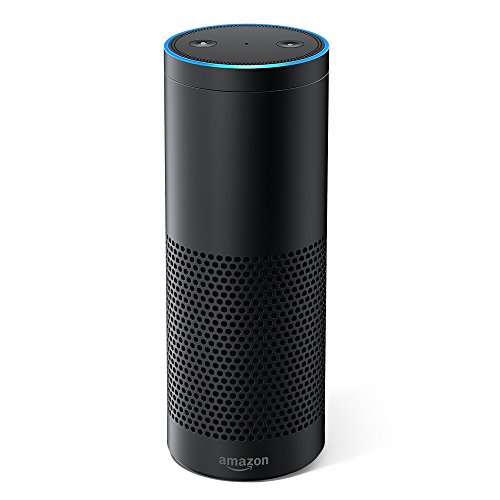
OK Google, we really should applaud smart speakers and buy everyone one for Christmas.  ‘Cos when it comes to using those, people are far more likely to ask Alexa to play a radio station than any other form of comparable audio entertainment (58% of device eartime). On i-pads and smart phones, folk are much more likely to get up to all sorts. 

Although it accounts for but a pint-sized proportion of radio listening time and by currently just 1.1% of adults - there is something hugely encouraging about the love affair between radio and smart speakers. The biggest - and most distinctive - radio brands will win - and current radio operators may or may not be running those. Analyst firm OVUM suggests 40% of homes will be 'smart' by 2021.

Radio remains a one to one medium. 51% of all adults suggest they listen to radio on their own, with 20% saying they listen with their partner.  Amongst the less -coupled 15-24s, there are a wider variety of possibilities -  just 43% listen alone, but 11% with families and 32% with colleagues

In-car listening is interesting. MIDAS suggests that whilst a majority of adults will choose to listen in on the move (57% reach), the share of listening attributed to those travellers is much less than columnists might expect, being outshone by the amount of time people listen whilst working or studying.  I often wonder whether we programmers take into account sufficiently when our light and heavy listeners are most likely to be with us.

Overall, MIDAS suggests, if you picture your listener serving an angry customer, reading a physics text book, driving to Ingoldmells, eating a microwave meal, scrubbing the grill pan or just chilling – then you’ve accounted for about 90% of all listening.  The column headings indicate, however, no-one has sex whilst listening to the radio. Most off-putting if it's your own voice-tracked show.

All data MIDAS, RAJAR/IpsosMori September 2017 unless otherwise stated.


Grab my book 'Radio Moments'50 years of radio - life on the inside. A personal and frighteningly candid reflection on life in radio now and then. The drama - the characters - the headaches - the victories.


Also 'How to Make Great Radio'. Techniques for today's presenters and producers.  Great for newcomers - and food for thought if you've been doing it years.


Monday, 7 April 2014

Commercial Radio - An A to Z of jobs

"Are you on-air or just behind the scenes?", people ask when they discover you're in radio. When you mumble "behind the scenes'" the conversation then usually reverts from Moyles to Moyes. 

It doesn't sound very interesting, this 'behind the scenes' business, does it? That's why, when the bespectacled Tom Williams from the Student Radio Association Tweeted that I'd be talking at this year's conference about 'jobs behind the scenes in commercial radio', I rather feared no-one would turn up to my humble break-out. How great though to see so many tall Generation Z Digital Natives just buzzing with energy about this hundred year old thing called radio.


I guess the real topic was the spread of vacancies for which we've often sought to recruit great candidates - and sometimes failed. And the importance of commercial awareness in them all. 

Yes, there are presenter opportunities. If you're going to be better than the rest at that, I'd be the first to say 'stick at it'. Britain needs you. But if you're likely only to be average at best, you'll be competing against hundreds of others for very few opportunities.  You'll need luck to get through the door; and even then, the path ahead may not be smooth.  Decent presenters can often be out of work.  And, rather like the confident singers poised in the rain at X-factor auditions, many people who think they are gifted really are not. 

And then there are the other opportunities.  Many, many of them. Exciting jobs in a truly brilliant industry. Creative opportunities, seizing the spirit and energy of this great, great medium.  They're not 'behind the scenes'. Your work will be seen and heard by thousands. If you apply yourself to winning one of these gigs, your chances of success are great.  And, unless you are a truly gifted presenter, they can earn you more money and afford you more security too. 

C. Creative copy-writers. Every commercial station has ads. Great ads are crucial to clients renewing deals; and important to listeners, given they account for up to 25% of the output. Can you write to a brief to sell a product in a memorable, pithy way? That's one job. And bringing those scripts to life through directing the voice-over and mixing the sound elements, that's another.

D. Design. Great radio brands look awesome. Radio stations now have an ever-growing range of areas where visual identity is crucial. There are a multitude of projects for hard visual material and online content. Talented graphic designers with their jeans hanging low (thinking of no-one in particular) are kept very busy. Similarly, although few stations will have full time photographers, there's always a call for someone on site to have that gift (the great dog shot below by our Kirsty Whitaker). If you've got that skill alongside another, make sure it's known. 

I. Imagers.  Listen to the fine production you hear on a great radio station.  Its audio identity, helping to sell the benefits of listening to that station. Sounds and words which influence how you feel about the brand. That's Imaging. If you're a gifted creative writer and you can bring your ideas to audio reality with a brilliant ear for sound, jobs in Imaging are for you. If the power of your scripts is above average, you'll quickly set yourself apart. Even some imagers struggle with the power of the word.

J. Journalists. Think newsrooms are overflowing with people? Think again. If you've the right instinct, training, knowledge and intelligence, together with the ability to 'tell' the news in a voice which does not sound whiney, you can likely walk into a gig. Commercial radio newsrooms are fluid places, with many great candidates moving quickly from commercial radio to Sky or the BBC. Sad to see them go, but understandable that many will wish to move gently to new homes where speech forms a greater proportion of the output. They've now made room for you, if you're up for the challenge.

M. Marketing. In competitive markets, stations do crazy stuff to get noticed. The marketing teams are involved in getting the brand out there. From devising and booking TV campaigns on the largest brands; to organising an appearance or visibility in a local shopping centre. From delivering a breakfast show stunt to organising a Christmas lights switch-on. From getting car stickers in garages to arranging smiling weekend activity in a car dealer. Can you devise concepts? Or simply bloody good at making sure things happen through impeccable event management. As the radio and entertainment landscape grows ever more competitive, Marketing staff are key. 

P. Producers.  Like football coaches, many great producers might have done a bit on-air, but are better at helping others do their best work. To the on-air talent, they are variously a friend, a boss, and a creative genius.  They need to understand the art and science of contemporary breakfast radio and be able to create memorable  moments - daily. They understand story-telling. Producers understand the competitors as they understand their own brand; and live and breathe their markets. They're frighteningly well-organised and hard workers too, with their mind on the job whether 'at work' or not.  And they have turned persuading and influencing into an art-form.  Does that sound like you?

R. Research. I know which TV shows my audience love most; and my commercial teams know what proportion of our listeners are likely to be buying a car soon. Our programming teams know what Gem 106 and Free Radio listeners are listening to when they're not listening to us. If you love facts and figures, radio's a great place to use that passion in a creative environment. 

S. Sales executive. It's not about flogging spots. It's about absorbing a client's marketing objectives and understanding how you can best support them effectively through radio. Great sales execs become a trusted 'consultant'  for the client, and you'll be influencing marketing strategy beyond radio. And earning a healthy slice of the spend. Check the RAB site and get your head around the art and science of how radio persuades like no other medium, it's fascinating stuff. Few good sales execs are out of work.

S & P. Sponsorship & Promotions executive/implementer/commercial programmer.  This is where programming and commercial meet in harmony.  Memorable concepts are devised to the advantage of both the client brand and the station.  Here's a quick example: YourVets were one of our clients.  Did we mount a dull competition to win dog food? No. We delivered the 'doggy wedding', which was exactly as you'd imagine. Fancy getting involved in that stuff? Great with ideas? Good with operational detail? Good with relationships? Can you stand up in front of a client and bring an idea to life? Yes? This job's for you.  

S. Social Media/online is growing daily. Operating a radio brand's social presence, combined with the station's website, is tantamount to running another radio station. A 'live' breathing thing which demands the immediacy and attitude of the brand to which it relates. Can you write with
the right tone of voice? It's a rare skill. Do you get what goes viral and what does not? Can you use social media to promulgate the station brand? You should be demonstrating your prowess already in the tone of your own personal social media before you put your hand up for these gigs. 

T. Traffic/Scheduling There's a reason why the next ad you hear will be in the place it is. Someone had to juggle them round, and it's a complex task. Who are they targeting? When? What else is in the break?  Are we delivering against the order? A quart into a pint pot.  Balancing things which do not balance. The 'air traffic control for radio'. Maybe one for you.

T. Technical. From building flashy new studios to mounting OBs from silly places.  From repairing a fizzing mixing desk from Coke damage to transmission technology or true innovation, it's a job for a broadcast engineer. And if you can both mend things - and explain patiently what you're doing to those who don't understand what on earth you are talking about - all the better. A good ear for mixing is often crucial too, and if the station to which you're applying attaches importance to live music, you'll need to excel at it. It's creative technology: imagineering. IT can be a distinct division: IT people who tolerate the creative talent round them, understand the immediacy of this 24 hour medium, and love to enable rather than prevent are always in demand.  Similarly developers to do the hard work on building and re-building the websites and connecting play-out systems to the outside world. When no-one steps forward for gigs like that, I step back and wonder what UK plc is educating people to do.

V. Video. Yes, I know it's radio, but never before have we needed quite so much video - of an increasingly high quality. For websites and for social media; from filming crazy breakfast antics to  producing a neat little video for a commercial client. If you're up to it, stations need you.

Plus, remember the sensible jobs. Every business needs utterly dedicated accounts staff, cash collection, administrators, HR staff and the like.  And, when you're doing one of those crucial jobs, but within a radio environment, it's got to be more fun than in a widget factory.  Yes, you can both be in radio, and keep your parents happy. 

By the time I get back to base today, I'll have some more presenter auditions in my inbox and a flurry of poorly-written and vague work experience requests.  I'll likely hear from no-one with genuine proven interest in many of the above.  And nor will fellow department heads.  

Give the 'other jobs' some thought. You could find your skill set makes you just brilliant at one of them, You'll likely get through the door sooner, and if you're good, that full time job offer will swiftly follow. On smaller stations, a number of the above skills are useful armoury; and increasingly, agile, fresh minds mean that new posts are being created which absorb some of the above -  and new skills.  

And if you do have any real on-air performing talent after all, you'll be in the right place.  


Grab my book 'How to Make Great Radio'. Published by Biteback. 


What can radio learn from how it has handled COVID 19?

In times like this, you turn to your friends. And radio is a friend. Day or night, it’s there to pick-you up, to comfort you, to explai...