Monday, 11 February 2019

Radio - A Force for Good. World Radio Day 2019.


A friend from Capital recently told me the story of a call he'd aired between him and a teenage girl. He’d spoken to her in the way good presenters do.

Next day, her mother called in to the station bearing gifts. It transpired that the girl was being bullied because of her accent. Kids pick up on these things in a particularly destructive way. But – as the mother told the presenter – her daughter’s brief appearance on-air and the friendship with the presenter that the tone of the call suggested gave her cred.  The bullying stopped.

The United Nations World Radio Day returns on Wednesday 13th February. The UN Secretary-General António Guterres spelt out this year’s focus:

"On this World Radio Day, let us recognize the power of radio to promote dialogue, tolerance and peace".

Around the World to this day, radio plays a key role.  I recall vividly my brief spell in Kenya a few years ago helping to establish a structure for licensed commercial broadcasters. Outside the big cities where TV penetration and literacy levels were low, radio was a lifeline. Used sensibly and regulated fairly, it can play a key role in making democracy work.

The drama ‘New Home, New Life’, swapped Ambridge for Afghanistan, with storylines about organic pigs, forced marriages and land mines. Partly developed by Archers’ producers and broadcast on the BBC World Service, was said to draw audiences of more than 35 million.

New languages and services are being bolted on to the World Service on a scale not seen since WWII - and the list of countries jamming her is interesting. The tale of international cat and mouse sounds like Ofcom vs the pirates on a London housing estate. 

As the debate on future BBC funding rages yet again, let’s remember that the investment in the World Service saves lives. Fact.

Radio in South Sudan is no picnic. I recall from a TechCon conference the pictures of a bullet-damaged satellite dish and of the transmitter being floated downstream on a raft – in the absence of roads - as the intrepid operators sought to stay on air. Add to the logistic challenges, the beating sun, tropical rains and the political challenges, and you get some idea of the determination that radio needs to do its job.

In the relative peace with which the UK has been generally blessed in recent generations, and the advanced state of literacy and communications, it’s easy to think that radio here has been reduced to fluffiness. Many broadcasters will assure you, however, that whilst entertainment rightly plays a huge role, radio’s engagement still carries power and influence – whatever the format.

A news report last week suggested that elderly people in the UK feel “so starved of information after their last local paper closed” that an MP suggested they are calling his office for news updates.

"I was amazed to have elderly residents ringing my office to say would I keep them informed of the news," he said. It’s a salutary reminder of the value of BBC local radio to older listeners. Just about any BBC local broadcaster will tell a story of a listener for whom the service is a life-saver.

Small commercial and community stations too have their tales to tell – whether the school dinner menus announced on Radio Scilly or the loyal Lincs FM listener. From the school closures and travel news - to the programmes which seized the mood of Manchester on the hours after the Manchester Arena bombing - from Key 103, BBC Radio Manchester and Capital. On Capital, shows were localised, pace lowered and backing music dropped as Ant Payne talked to his own. Radio is not just about news – it’s the comforting arm around your shoulder.

Major stations also carry influence. Witness Greg James’s ‘Pedal to the Peaks for Sport Relief’ on BBC Radio 1. Radio’s authenticity and connection welding an audience to a cause. Bauer’s Cash for Kids and Global’s Make Some Noise and the efforts of other fine commercial stations contributed to a sum of £30m raised for good causes in 2017.

Radio illuminates. As I said once before of interviewees, having heard an emotive Desert Island Discs, watch a TV interview and you’ve seen them – listen to radio and you know them. Listening to LBC, who can fail to be moved and often persuaded by the powerful personal contributions from the natural and yet enviable diversity of callers.

As I drove to see my dad in his nursing home one day, I recall it was the passionate contribution from one powerful panellist on Radio 4’s ‘Any Questions’ which helped solidify my own view finally on the complex matter of Brexit just before the referendum.  Put to one side the dull Twitter folk - journalists try their best on our well-regulated medium; and recent months have further focused the minds of correspondents on the importance of clear conversational explanation. Little wonder radio is the most trusted medium for national news – 77% trust radio, compared to 15% who trust social media. (Valuing Radio - A report by the All-Party Parliamentary Group on Commercial Radio)

Radio is the mass medium reaching the widest audience in the world. However it is produced, broadcast  - or defined  - in future, it will always be there doing some good.

In the words of the UN: “Radio is still the most dynamic, reactive and engaging medium there is, adapting to 21st century changes and offering new ways to interact and participate. Where social media and audience fragmentation can put us in media bubbles of like-minded people, radio is uniquely positioned to bring communities together and foster positive dialogue for change.”

Happy World Radio Day 2019
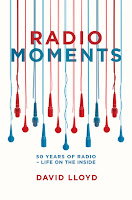

Grab my book 'Radio Moments': 50 years of radio - life on the inside. A personal and frighteningly candid reflection on life in radio now and then. The drama - the characters - the headaches - the victories. Available in paperback or ebook.


Also 'How to Make Great Radio'. Techniques for today's presenters and producers.  Great for newcomers - and real food for thought if you've been doing it years. 
Available in paperback or ebook.


Need a conference speaker? I'd love to work with you.


I work with radio stations around the world in a range of areas. From programme strategy to research, key brand work and marketing strategy. From presenter training to compliance, consultation responses and licensing. Talk to me via www.davidlloydradio.com


Monday, 28 January 2019

To Target or Not to Target

The dirty world of audience targeting reared its head in the context of BBC local radio last November (Nov 2017). Maybe the DG's speech has been misinterpreted, and I think I can see how his objectives could have been in the context of the vision outlined and the occasion at which the speech was delivered, but I'd love to be sure.

Do you recall when Radio X conceded it was targeting blokes (currently its listening is 65% male. Quelle horreur.

When there were few other stations in town, you could do what you like – providing you did it reasonably well.  Then came competitors.  If there is someone doing what you do - but, better - for a particular slug of your audience, your audience will find it.

If you set up a station in a competitive market aiming to do everything for everybody, you will fail.

It’s not by accident that Heart, Galaxy and Kiss stole swathes of audiences from the original tier of ILR stations which have painfully been trying to reclaim ground ever since.  Targeting is about identifying your audience, understanding it, and addressing its needs. 

Great stations have focus. When they succeed, they own their target audience and those listeners deliver real loyalty. Then, the shoulders of that audience are built too with secondary audiences, without compromising the integrity of the primary audience. Heart targets women with vigour – and attracts men along the way for the tastes they share withthe target.

Targeting is not necessarily just about demographics. It is about focus. Who are you expecting to listen? Do such people exist and are they likely to tune in? My issue is not that BBC local radio moves from 50+ - it is any suggestion that it moves from 50+ to a target not defined at all. 

Many great stations in competitive markets define their target listener even more specifically than just age.  Kiss owns its young audience in London - delivering 64% of its hours from the under 35s – building such scale there that they then actually beat both Radio 1 and Capital in overall all-adult share.

Other target audiences can be defined by their tastes in music or other specific interests. TalkSPORT is for blokes who like nattering about sport. Radio 3 is defined by serious lovers of classical music. Classic FM’s target listener will be different, driven more by mood – and its content and tone address the tastes of its chosen audience.  Radio 4’s approach to news and talk is very different from LBC’s. None of those stations is targeting everyone - they have someone in mind and their on-air recipe is distinctive and consistent. No one doubts what LBC does and how it does it.

It’s pretty helpful to know who you are talking to when pick a song or frame a talk topic. As a 19 year old on air in Nottingham, I knew Radio Trent was targeting some way above my own age, and that was on my mind as I pushed up the fader.  The audiences were likely the better for it.

Some people have argued that Radio 2 is successful and yet ‘not targeted’. Putting to one side the fact that its operating licence requires it to be targeted 35+, I suspect their music programmers would concede too that they know which songs work for their audience and which do not – and that sense probably stretches beyond a demographic.

‘We have to backtrack 80-, 70- and 60-year-olds to when they were 13 and look at how that informed their music,’ ‘What you will always get in our mix at Radio 2 is rock’n’roll. But there’s a degree of interest in the Eighties again, for example, because it evokes great memories for today’s older people.’ (Jeff Smith, Head of Music at Radio 2)  

Ken Bruce can talk naturally to his audience in a way that a thoroughly proficient 26 year old would not, because he’s not 26. He’s chatting to people a bit like him.  Like Jeremy Vine, his cultural references, his life experience all mean that the station’s principal audience feel he is one of them.  There's probably a reason why Ken's on 2 and Grimmers is on 1.

If Radio 2 is really targeted at everyone, we should sack the Controller. Rajar indicates 91% of Radio 2 listening is from those aged over 35.  It would not be so successful were it to worry about those under 35 too.

I cannot accept that the women next door has the same taste in music and chat as me just because she lives next door. Geography is not sufficient to unite a station format. Localness can be relevant - and it can build loyalty - but it cannot work at the exclusion of everything else. 

There appears to be a school of thought emerging which suggests that this 'radio for everyone' will be achieved by targeting by programme. That listeners will think: "ah – it’s Thursday at 2 – I must turn on BBC Radio Trumpton – there’s a programme just for me".  Yes, people can ‘listen again’ at a a time of their choosing, but if that’s to be relied on for audience bulk, just put the programme online in the first place.

All research about BBC local radio, time and time again, has spoken of the friendship that listeners enjoy with their station. If I have a friend, I like them to be there when I need them, and behave much like they were last time I met up. If I pop round to Maisie's for a coffee and she's smoking a joint and playing Dizzee Rascal loudly, I'm not sure I'll be round again any time soon.

If, every time I drop into my station, they are doing something different, I rather think I’ll stop 
bothering.   

The 60s pirates were loved because they spoke to youth. Yes, youth could savour Pick of The Pops on the Light Programme, but the pirates suited them better because they did what youth loved all the time. 

Similarly, if I am expected to keep dipping in to a station just in case it happens to be a show aimed at me then I’ll quickly become frustrated and delete it from my repertoire. That’s how poor focus impacts on reach as well as listening hours. And on commercial radio, reach matters hugely too. Just ask the PD - or a local sales exec.

50 years of Radio 4 heritage has got the Archers, Today and PM embedded in the habitual listener clock, but then again, I think we’d all still find it pretty easy to give an impromptu speech about the target Radio 4 listener. And I suspect any programme pitch would be turned down pretty swiftly if it did not appeal to the likely Radio 4 listener. You can smell Radio 4 from a distance – and it’s a beautiful aroma. Again, it knows what it does.

Can you have specific programmes off-peak, out of the limelight. Yes, you can.  Sturdy stations can afford to go off piste in off-peak hours where the risk is low and the potential gains out-weigh the risk. The real audience battle, though, is 6-6. That needs to have focus.

If targeting everyone worked, we’d have all been doing it for years.  We certainly wouldn’t have bothered with having the luxury of both Radio 1 and 2. Highly motivated, well-rewarded staff doing excellent BBC local programmes on whatever they fancy for whichever audience they choose is a thoroughly attractive proposition.  The problem is, few would listen.  And whilst audience size may rightly not be the  sole determiner of success for the BBC, even Auntie has to watch just how much is being spent on how many - it's certainly a figure that's in her annual report.

BBC local radio has suffered audience losses – even beyond what one might have expected from the changing media landscape. But I contest it has not done as well as it might because it has not been focused enough.  It does not own any 50+ demographic as well as Radio 1 owns the more highly contested younger demographics. A 50+ person witnesses how off-beam programmes can be.  Stations have been variously too old or too young.  Compare that with Capital’s obsessive addressing of its target audience.

There have been other BBC local radio approaches through the years where the battle is fiercest – GMR in Manchester – and numerous versions of BBC local radio in London. They’re not still around.

The secret to BBC local radio success is more focus not less focus. A mix of music and chat from gifted communicators of the right quality on a spine of trusted national and local news. And if there is a target - what about the demographic which values its localness more than anyone – because they’ve lived there longest. A fitting blend of music and chat which has no rivals in a demographic where a commercial operator is unlikely to tread.

The local newsrooms have a crucial job ahead.

Do allow the newsrooms to compile content for all, delivered online and on social media. To have a decently-resourced solid BBC newsroom addressing all relevant stories which emerge locally is eminently sensible. But that sound news strategy should not also define the target audience for the local radio station – the newsroom should provide tailored bulletins as a service provider for the BBC local audience.

This management freedom and 'do as you like' will work decently in smaller, less competitive markets and in ones where the Man Eds really know what they are doing and choose to inject sensible  focus.  Elsewhere it will fail.

I may be wrong. Time will tell.  I shall watch with interest – as will their loyal existing listeners. I love BBC local radio - and care passionately. I worry this will get messy and expensive and will lead to its demise next time around when its audiences and cost will be even more challenging to justify than now.

This blog post was written in November 2017, following the speech in Coventry by Tony Hall: "First of all, I want us to reflect the community – every part of it – and that means ending the idea of targeting just the over 50s. Local radio should be for EVERYBODY - Frank Gillard was right!"


I work with radio stations around the world in a range of areas. From programme strategy to research, key brand work and marketing strategy. From presenter training to compliance, consultation responses and licensing. Talk to me via www.davidlloydradio.com


Grab my book 'Radio Moments': 50 years of radio - life on the inside. A personal and frighteningly candid reflection on life in radio now and then. The drama - the characters - the headaches - the victories. Available in paperback or ebook.


Also 'How to Make Great Radio'. Techniques for today's presenters and producers.  Great for newcomers - and real food for thought if you've been doing it years. 
Available in paperback or ebook.


Need a conference speaker? I'd love to work with you.


Saturday, 19 January 2019

Is it time for journalists who write about radio to listen a little more?


How wonderful it is that radio is once again dominating the headlines.

This quiet giant has been so often overlooked. Despite around nine out of ten adults spending almost a full day a week of their lives with it, and forming a relationship unrivalled by any other medium, it’s rarely credited with the scale and influence it deserves. Although tributes are fulsome when a leading broadcaster dies, it’s rarely recognised that the medium itself must be pretty special if the demise of one of its own generates such a sense of loss.

Listeners love radio. They define themselves by it – readily dubbing themselves ‘a Heart listener’ or a ‘Radio 4 listener’ in a way no human being would proudly proclaim they were an ITV viewer.

Now, with the national radio shenanigans, radio is earning acres of enthusiastic coverage – and that’s a great thing. 

Is it just me, however, who reads some of the scribblings and breathes silent fury.

Articles appear to be written by someone who just got a radio for Christmas - or has not listened since 1980 – or owns one of those puzzling sets which only pick up BBC programmes – and who lives in London.

This week, in Campaign, we read of the Evans move shaking up breakfast commercial radio “after years of nondescript nobodies, tightly regulated in what they are allowed to play or say".

It’s a lovely alliterative line. It’s also nonsense.

As a former regulator, I can assure the author that the regulations are broadly the same as they were decades ago. As far as what is allowed in terms of 'offence', the rules are much the same as ever through the IBA, Radio Authority and Ofcom, with interpretation moving in line with audience tastes and opinions. There has been no sudden shift.

As far as 'nondescript nobodies' are concerned, the last few decades have been as full of the greats as ever. And, in the most competitive broadcasting world there has ever been, many of them have had to be on top of their game like no other generation.  The amount of work from breakfast show presenters and teams across the country in the last decade or two often exceeds the effort and thought that was expended in prior generations. They have been aiming to produce distinctive radio which their audience will remember.

The 'highly regulated' 'nondescript nobody' Chris Moyles is doing his thing on commercial Radio X – and has been for four years.  I’m sure he sits there with laminated copies of the rules.

And Chris Evans himself, of course, was on commercial radio in the 90s - presumably the very time when the journalist suggests it was a land of nobodies

Sam & Amy (now on Virgin – and for years on Gem) carried off the awards time after time, in the face of BBC and commercial national radio shows, with their blend of honest me-too moments and the sort of open conversation people of their age have. Much as I love them both, I doubt either of them would have bothered turning up if tightly regulated. And to call either of them a nondescript nobody is laughable. They hold a room – on and off air.

The multi-Gold award-winning Christian O’Connell on Absolute Radio was tightly regulated for sure, as I’m sure David Cameron would agree when he dared to use the word twat on Christian’s show . The complaint was not upheld.

What of the great local shows. The North East loves Steve & Karen. They’ve been on-air eighteen years together, now on Metro, and own their market. Broadcasters who are nondescript nobodies do not earn the level of love and engagement they receive. 'Hirsty's Daily Dose' in Yorkshire was huge for over a decade, making the station the largest outside London.

And you will not speedily walk down any road in Coventry with John Dalziel from Free Radio. If this nondescript nobody is not recognised in 100 yards, I’d be surprised. And let’s not forget the Scottish greats too like Galloway.

Radio in recent years has been creative, considered, and more authentic than ever. Highly amusing moments - and poignant moments like never before.

Far from the ‘primacy of the DJ’ about to be revived, their influence has never gone away. The influential broadcasters cited in the article - from Tony Blackburn  to Everett and Robbie Vincent - thoroughly deserve the acclaim, but there has been great radio since too. 

I wish the article were a rare example of nonsense.  Whilst there are columnists who write sensibly and Gillian Reynolds’s writings on historical matters are flawless, many others simply suggest laziness.

I recall the one which concluded that Radio 4 was losing out in audiences to podcast and 5 live. There was no mention of the giant LBC – and the fact that 5 Live audiences had actually been in a decline. So, no facts; indeed, the contrary.

In an analysis of radio election coverage, I recall being shocked that journalists had not thought to dip into LBC to highlight its excellent, fresh offering with Iain Dale and former Home Secretary Jacqui Smith.

There is the implicit argument too that if you’re not saying a lot, it’s tightly regulated and low quality.  Anyone who thinks that good music-intensive contemporary radio with tight links is easy is wrong. It is an art. The people at the top of the CHR game now, particularly at Capital, are doing some of the cleverest and most considered ‘top 40 radio’ that the UK has ever heard.

Then there is the ‘everyone is podcasting now and no-one listens to live radio any more’ narrative.  Podcasting is growing – and that’s great. But let’s acknowledge that almost nine out of ten of adults don’t bother with it at any stage of a week.*12% weekly reach Rajar Midas Winter 2018)

Thank goodness for Eddie Mair’s arrival at LBC. The Radio Times now acknowledges commercial radio at last.  In the years until now, any radio commentary in that organ was largely confined to trumpeting obscure drama on Radio 3.

When I was last being grumpy about this - one BBC chappie suggested to me there was not much one could write about commercial radio. Well, if you cannot write about the big personalities, their chopping and changing, the beautiful ad-hoc moments of listener interaction, platform matters, new formats, crisis coverage, the battle for supremacy, the changing music mix, the brand battles, the takeovers and examples of impressive commercial brand integration - then you shouldn’t really be writing at all. 

The sniffy ‘local commercial radio is a bit naff’ suggestion does not stand the test when one looks at the size of its audiences and the level of engagement from shows which rule their patches.

'Video killed the radio star'. If you haven't been able to think of a better headline since that song was released in 1979, go get another job.

Too many journalists and columnists appear to bully radio. And certainly commercial radio which a staggering 65% of UK adults sample each week.  It’s time for the authors to pause before writing – and commit to the level of investigation and consideration that one hopes they’d invest in any story. 

Radio deserves better.

And good luck, Chris.

Stop press. Nice radio reviewer on Radio 4 (18.1.19)  talking breakfast shows tells us all about 'Radio 6'.


I work with radio stations around the world in a range of areas. From programme strategy to research, key brand work and marketing strategy. From presenter training to compliance, consultation responses and licensing. Talk to me via www.davidlloydradio.com


Grab my book 'Radio Moments': 50 years of radio - life on the inside. A personal and frighteningly candid reflection on life in radio now and then. The drama - the characters - the headaches - the victories. Available in paperback or ebook.


Also 'How to Make Great Radio'. Techniques for today's presenters and producers.  Great for newcomers - and real food for thought if you've been doing it years. 
Available in paperback or ebook.


Need a conference speaker? I'd love to work with you.


Monday, 31 December 2018

Farewell, Network Chart


At 7.00 on Sunday night (30th December 2018), the final, united, commercial radio chart with Marvin Humes faded away; and commercial groups prepared to plough their own Sunday night programming furrow. 

Whilst the Big Top 40 continues on Global stations, now with the great Will Manning; Bauer will have its own show; and the Wireless Group grow their Total Access property to a Top 40 offering with Olivia Jones. 

It’s the end of an era – and a decision one can thoroughly understand in the climate and structure of today’s commercial radio world. But it’s also a chance to salute the architects of the animal which has served commercial radio superbly for generations.

Sunday nights on BBC radio through to the 1980s had become an impenetrable tradition. Although you knew which artist was up and which was down - given the chart itself was published during the week - Sunday was the chance to hear all the songs one after the other in their entirety.  What’s more, the show was aired on AM and FM, as Radio 1 stole Radio 2’s FM transmitters for the weekly appointment. UK listeners slotted in their C120 cassettes so they could later ‘listen on demand’. We radio freaks recorded the shows just to hear the JAM jingles in stereo - and marvel at the art of the countdown delivery from the likes of Tom, Simon, Tommy, Bruno, Mark and Tony.

Meanwhile, commercial radio trotted out a host of distinctive Sunday evening programme offerings.  As was the case with commercial radio generally, some of those offerings were superb, and some decidedly less so.  They most certainly offered listener choice. Some stations had created their own chart shows, others eschewed the tactic. I fondly recall Trent’s first home-grown-chart which briefly adopted the novel approach of starting at Number One and working up to the least-selling song.


Then in September 1984, commercial radio came together for ‘the Network Chart’. Politically, getting all stations, back then owned by a multitude of colourful companies, to agree on carrying a single programme was a coup, pulled off by the then Association of Independent Radio Contractors (AIRC) – the trade body for 'Independent Local Radio' stations, the equivalent of which now is Radiocentre.

Growing audiences and commercial radio stature was an aim, but also this was principally about creating a huge property which commercial radio could sell to significant national brands who would only trouble with radio if it offered real scale. Commercial radio had achieved just a 2% share of all UK advertising and a catalyst was needed to kickstart growth.

There were technical hurdles in those pre-satellite days; and the option chosen for dissemination to stations was an IRN news distribution line. As was the case with the national ads at that stage fed to stations in the same way, this was mono. It didn’t sound great – but most listeners on their trannies didn’t care too much – and an appreciable proportion were still listening on AM anyway.

At the outset, the programme was superbly hosted by Kid Jensen, who offered a fresh enthusiastic approach and a slightly less functional tactic than the BBC’s established fine option.  It had energy and presence. And, for a time the commercial chart was more up to date than the BBC chart. It also included an element of airplay stats.

"No-one took it seriously in the those days" (Kid Jensen speaking in the late 80s)

In terms of revenue, sponsorship was not quite possible at the outset.  At that stage, the regulations did not quite allow such sullying of our airwaves. The regulator did, however, allow a clever loophole: 'co-funding'. Within strict parameters, you could credit the funder of a show – but the show itself could not be defined by the funder, nor was any commercially-inspired funding allowed within.

Thus, after a brief foray with a De Beers Jewellers relationship, Nescafe came on board.  The show became the pithy ‘Network Chart brought to you in association with Nescafe’.

Kid put his life and soul into the programme, and those of us around at the time recall him journeying tirelessly around the country to help boost the show’s profile, armed with the sort of merchandising that few local stations could afford, proper sweat shirts, T shirts and the list went on. This was the big time. Although those of us on the local stations worried a little about having our local hours snatched, we quite liked mixing with this huge Radio 1 and Luxembourg presenter. And we liked the free sweat shirts.

Kid left the show in 1993, and Nescafe gave way to Pepsi as Neil Fox took the helm. By that stage, the rules were relaxed and the show really could be announced as ‘The Pepsi Network Chart’, later ‘the Pepsi Chart’. To have Pepsi as a brand on-air across the UK was a real achievement for the network. The show evolved into hit40uk and, in 2009, became The Big Top 40 Show, then enjoying a long relationship with Vodafone

The show’s personality changed too, with Neil, at first, injecting more star-laden talk content to the show, setting it further aside from the BBC offering, which in turn evolved too. The reveal day of the BBC chart moved in 1987 too from Tuesdays to Sundays, with Bruno Brookes.

There were interruptions along the way as radio groups ran off with their mistresses. The Smash Hits chart replaced the network chart for a period on EMAP (now Bauer) stations. And the A list and the Fresh 40  approach was a brief attempt to separate by format, so that the huge newer adult contemporary  stations could enjoy hours of 'chart' music which better fitted their formats. Each time, however, the stations eventually returned to the family - with the single all-format, all station offering which we recognise until last Sunday.

Commercial radio audiences had grown, to the extent that the BBC’s Sunday night lead was utterly extinguished.  In July 2015, the BBC countdown moved to Friday nights with Greg James. By that stage, Radio 1's audience reach on Sunday at 18.00 was 492,000 - commercial radio's reach was 2.3m.

Now, commercial radio groups announce they are going their own way rather than share the same chart.  In some ways, the chart mechanic itself has lost some of its stature. No longer are record shops phoned to establish sales stats - leading to some breathless weekly on-air announcement of real note - the climax has thus evaporated to some extent.  With streaming now a key element, data is real-time. It's right that the great British Sunday tradition of chart shows should take the next step.

But most importantly, the structure of commercial radio is such now that it can do what the chart did - all the time.  From the days when the chart was the only significant cohesive music property commercial radio could sell to client brands, the large groups now each have their own properties of scale. They would likely prefer to put their efforts into producing and selling those rather than boost their rivals. It also means that each group can engineer its own programming to suit its own formats. 

And - as the medium gets ever more competitive - it's been complex deciding which stations can carry the chart - and it's certainly felt odd enthusing about a presenter who's on your station on a Sunday - but on your rival during the week.

Listeners will have more choice.

In a sense, the chart proved the point.  Scale is everything, if commercial radio is to be seen as an increasingly serious advertising medium.  Now, at last, commercial radio can deliver scale across the board - with the cohesive and polished major brands it has painfully assembled after 45 complex years. Good luck. Farewell, Network Chart - and all who sailed in her.


I work with radio stations around the world in a range of areas. From programme strategy to research, key brand work and marketing strategy. From presenter training to compliance, consultation responses and licensing. Talk to me via www.davidlloydradio.com


Grab my book 'Radio Moments': 50 years of radio - life on the inside. A personal and frighteningly candid reflection on life in radio now and then. The drama - the characters - the headaches - the victories. Available in paperback or ebook.


Also 'How to Make Great Radio'. Techniques for today's presenters and producers.  Great for newcomers - and real food for thought if you've been doing it years. 
Available in paperback or ebook.


Need a conference speaker? I'd love to work with you.


What can radio learn from how it has handled COVID 19?

In times like this, you turn to your friends. And radio is a friend. Day or night, it’s there to pick-you up, to comfort you, to explai...