Thursday, 10 November 2016

A Rose by Any Other Name

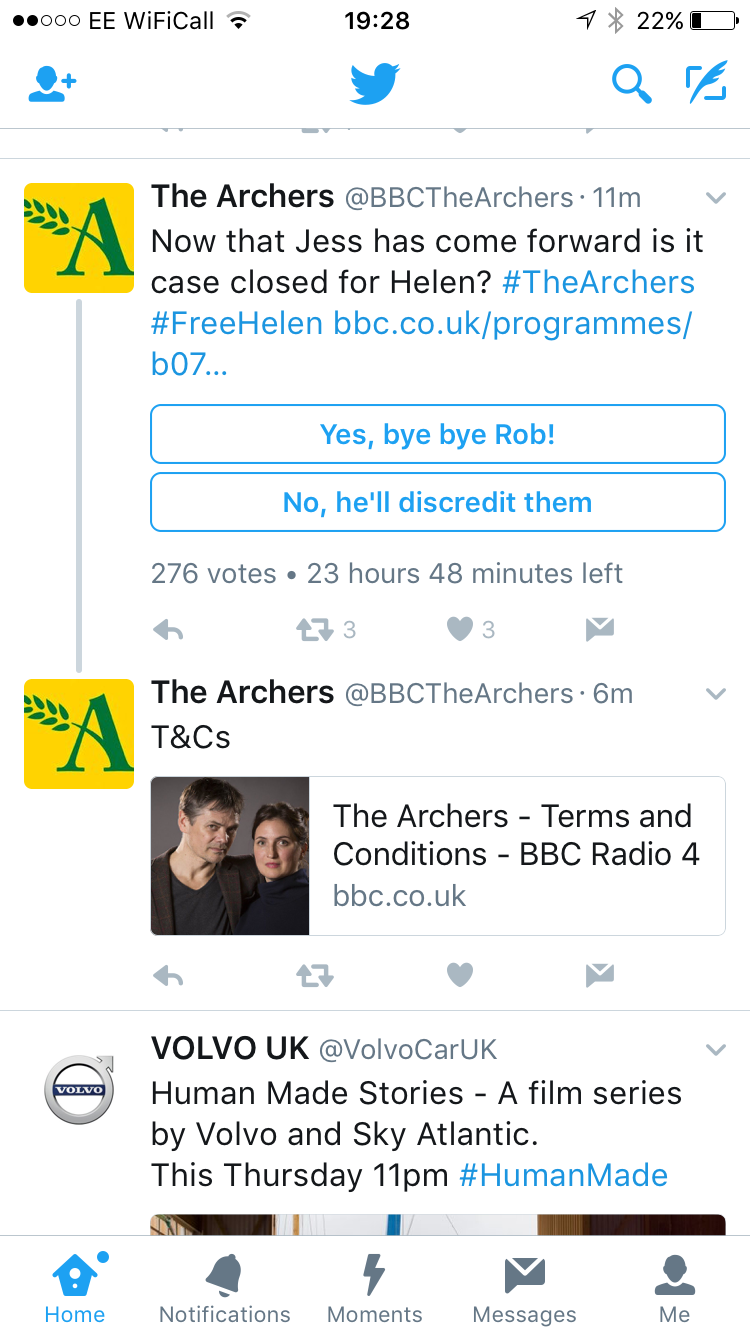
The determined blood-red poinsettia on our kitchen windowsill from last Christmas is still thriving. I gather that's unusual. 

Its success owes everything to the pampering from my ever-caring other half, and nothing to me.

Given my lack of horticultural prowess, it can only have been a Day Nurse overdose which drove me to cultivate an elaborate gardening allegory when I was invited to address the BBC local radio managing editors conference this week in a freezing cold Newcastle. 

'Finding Talent', said the Sans-serif heading on the PowerPoint slide. The lovely Gareth Roberts moderated and affable agent Chris North was alongside me.

I see the talent journey beginning with the right seed. A seed which promises something special. You're comforted by the picture on the packet - and you feel it'd really brighten up your garden.

You plant that seed in a small pot and tend to it carefully. 

At just the right stage, you transfer it carefully to a larger pot which you put in the right place.

You then water it. Feed it.  Let it see the sunlight.  Give it time to grow roots. Talk to it.

When it becomes a tad unwieldy, you prop it up with a bamboo stick or two and hope it chooses to lean vaguely in that direction. 

It has the odd season without flowers, but you stick with it.  
If all goes to plan, you end up with a great plant. You didn't design it. It chose its own direction. But you like it. And most people who visit quite like it too. Some don't, but they still never forget the day they walked around your garden.

There is another route.

Take that seed. Bung it straight into the big pot in the wrong soil. Place the pot in the shade. Feed it the wrong food. Forget to water it. Shout at it. As it grows, keep clipping it back so it doesn't risk becoming unmanageable. 

It'll be fine. It might even survive for some time until you find something better. It won't look bad. But no-one who ever comes into your garden will ever notice or remember it.

Finding great talent isn't simply discovery. It's about nurture too.  Every great performer was once not very good. 

As we despair about the lack of distinctive, original radio talent, should we despair too of a lack of expertise in the potting shed?

Monday, 7 November 2016

Bye for now, Jimmy Young

Presenters like to sing loudly with their headphones on.  Very few go on to huge chart success.

Jimmy Young did, hitting the 'top-spot' on the NME chart with ‘Unchained Melody’ and ‘the Man from Laramie’; and amassing an impressive string of other 50s favourites in the days when Number Ones sold millions.

He is best-remembered, however, for his radio. Hear, here, this unmistakable presenter, with his trademark Gloucestershire burr and catch phrases. He dominated daytime radio for decades, retiring reluctantly in 2002, aged 81, after 42 years at the BBC.


Jimmy had helped out in the family baking business, indeed he and his dad ended up in court when he was caught driving the family van in his early teens. 

His first love throughout was music. His mother taught him piano and encouraged his voice training. 

After a spell in the forces and as an electrician, a BBC producer spotted him playing piano at a swimming clubJim was duly handed his BBC Bakelite lanyard in August 1949.

His BBC career saw him hosting ‘Housewives Choice’ on the Light Programme for a few weeks in 1960, a successful run on weekend lates - and a few other offerings on Auntie's chill-out service. He was also to record  shows in London for the huge Radio Luxembourg. 

The broadcasting break had come not a moment too soon, as the ballads for which he’d been famous gave way to dirty rock ‘n roll.

Jimmy went on to appear daily on the fledgling BBC Radio 1, by which time he was already older than Moyles was when he left. Jim hosted its mid-morning show, broadcast, at least partly, on both Radio 1 and 2. 

'The JY Prog', as it became, migrated to a new home at Radio 2 in 73, with cautious programme management insisting that no interview begin until 15 minutes of the programme had elapsed. The programme's familiar sig tune, 'TownTalk' by Ken Woodman & His Piccadilly Brass, signaled the start of lunchtimes to 'seven and a half million housewives' in kitchens in the Home Counties.  

The vari-speeded ‘What’s the recipe today Jim’ was as much a part of national radio folklore back then as Ken Bruce’s PopMaster is now. 


Music-magazine programmes can work on radio, but only in the most capable of hands. Mixing real current affairs with jolly pop songs and chit chat is an art – and Jimmy had it - moving effortlessly from Carpenters to Cold War and colanders. The programme quickly acquired a reputation as the one politicians wanted to be on. In February 1975, Margaret Thatcher afforded her first interview as party leader to chirpy Jim.  JY’s show served huge audiences with insight into the issues of the day; albeit in a very different way from his successor, the excellent Jeremy Vine.

Little wonder his longevity in the national limelight and his reputation amongst those who matter earned him recognition at the Palace.  He was awarded the OBE in 1979, the CBE in 1993 and the Knight Bachelor of the Order of the British Empire in the 2002 Queen's New Year's Honours List for his services to broadcasting.

This gentleman broadcaster was a quiet, professional sort, who achieved huge audiences with a consistently successful radio programme for which he will be long-remembered. 

Bye - for now - Jim.


Friday, 4 November 2016

Conversations - The Story of a Series

The news of Terry Wogan’s death, so soon after the loss of Ed Stewart, focuses the mind.

Whilst we know that some broadcasters can continue happily on air until their 90s, we have started to wave farewell to some of the great names of our wonderful medium. 

If heaven had its own multiplex, they’d likely now have to consider a celestial Ofcom to work out just how to squeeze on so many incredible programme streams.

I see radio in three eras. The first era being its discovery and dominance before the TV in the corner muscled in; and the third being our current exciting digital era.

Between those lay a fond, busy second era when the medium diversified into pop and pirates, targeted national BBC radio, BBC local radio and ‘’ILR’ commercial radio. A medium of 45s and CDs, FM becoming dominant, disc jockeys becoming celebrities, the birth of 'the brand' and radio becoming a fully-fledged UK advertising medium.
  
That second era gave rise to some vividly colourful characters both on and off-air.  One looks back and wonders quite how we managed it all. Some people had innate talent which the blossoming medium thankfully amplified; others of us were just in the right place at the right time to enjoy a hell of a ride.

For good and for ill, life in radio will never be quite the same again. Not worse or better – just different. The digital future will see pioneering developments and huge excitement; and those involved will, in time, be able to look back fondly at their own period, as radio found its new place in people’s lives. 

For now, though, I felt a need to bottle the second era and capture the recollections of its characters. For us, and for posterity. This is our legacy.

That thought generated the ‘Conversations’ series. Hour-long programmes in which key characters in a range of radio roles reflect candidly on their own lives. Those tales tell a story of the medium itself through the last sixty or so years.


The subjects gave their time generously - and opened up candidly. Mark Goodier tested his mic for level, but then, as the recording rolled, he wisely threw off his cans to chat.  He knew exactly what I wanted.  The real Mark, talking to a friend.  'Conversations' is about authenticity, not performance.

Few of us have steered through our professional and personal lives without any dark periods.  Tom Edwards painted a fond picture of his pirate and Radio 2 days, but was similarly open about his battle with the booze and how close to death it bought him, before he regained control and lived to share his tale usefully. 

Ralph Bernard is still a busy man, even though he’s no longer running the largest commercial radio group, so I was flattered he gave up his time to chat. Given he’d just bought a new London flat, we sat on white garden furniture in his front room as he reflected. I was amused that he was so keen to make clear some points which he felt the industry at large never quite understood at the time. I'd be just the same.

Helen Boaden was deliciously frank and typically charming, and I was seething when some prat national press journalists took a few words out of context. The fact that they described her ‘speaking on national radio’ suggests they know as little about radio as they do about everything else. She is worth a hundred of them.

Having been one of so many who sent audition tapes in a Jiffy bag to Johnny Beerling, it was delight to spend an afternoon reminiscing in his sunny Yorkshire garden; and Nicky Horne similarly tempted me  into his London garden as we chewed over those early Capital days.


It’s interesting too hearing the same story from different angles. The Classic FM provenance has a number of different flavours.  ‘Conversations’, however, does not set out to challenge. It simply seeks a single perspective honestly expressed, at suitable length, through a single pair of eyes.

How fascinating to  acknowledge that some of these individuals reach back to the medium's very beginnings as they recall listening on a home made crystal set. And what a privilege to chat to 95 year old Teddy Johnson, formerly of Radio Luxembourg. From his nursing home, he recalled how the idea of a top 20 was first floated to him. What? Play all the current songs back to back? Kicking off the show with the last popular? It'll never catch on.

Thanks for the feedback. I’m so touched by the Tweets, DMs and emails. Notes arrive daily, not only from those who know the people or the period involved, but those who say ‘I wasn’t around in those days, and it’s so good to hear what it was like’.  Many busy radio folk saying the series is a welcome distraction from long dull car journeys.

I must thank too the handful of people who’ve offered to ‘do me’. Maybe one day; but I feel my days pale into insignificance as I chat to these titans. 37 episodes are in the can, with many more pencilled in. Enjoy.


Conversations is available on this Audioboom playlist. The programmes also feature in the #radiomoments podcast feed, alongside other material. New episodes appear around fortnightly. Episodes are also aired on Sunday nights at 10pm on in-Radio, and repeated through the week.

Stewart Francis
Giles Squire
Paul Brown
Colin Berry
Mark Goodier 
Johnnie Walker
Helen Boaden 
Quentin Howard 
Dirk Anthony
Nicky Horne
Jeremy Vine
Martin Campbell
Gillian Reynolds
Tom Edwards
Peter Levy
Teddy Johnson
Matthew Bannister
Chris Carnegy
Bob Hermon
Alice Arnold
Tony Prince
Johnny Beerling
Steve Allen
Michael Betton
Roger Mosey
Tim Blackmore
Tom Ross
David Hamilton
Roger Day
John Myers
Ian Rufus
Denis McCarthy (*special)
Trevor Dann
Ralph Bernard
Steve England
Phil Riley
John Evington
Ron Coles



Monday, 10 October 2016

Stop Press!

"Next on LBC, we'll take a thorough look at what's in the BBC 5 Live 0800 bulletin this morning'." 

Said no-one ever.

It's certainly not what you'd hear Nick Ferrari say.  Not least because his impressive tabloid gut means he instinctively teases much better than that. 

But, more importantly, he wouldn't say it as I suspect any stories worth mentioning would have been included in his own programme or bulletins; and, anyway, why would he wish to promote another news supplier without good cause?

Why does it happen all the time with press, though? Huge TV and radio stations allot chunks of their output to 'looking at the papers'. 

We broadcasters seem obsessed with chatting endlessly about what another media has chosen to include. Regardless of the fact that the broadcast programme is far more up to date than the press we are chatting deferentially about.

Maybe it's just a peculiar tradition. In my early days on-air in the '80s, disk-jockeys pored over the Sun for a quick funny to slot in between the Dooleys and Dollar. Mind you, there was little other material to inspire us, and no Internet or social media to point us to anything else. 

Back then, and to this day, it infuriates radio station news editors when presenters merrily read out a press headline in a 'wow look at this' tone of voice, when it was a story carried in the station's own bulletins the day before. It's as if it has to appear in the Mail before it becomes real news.

I'll leave others to write of the serious risks of presenters quoting a dodgy newspaper front page headline on-air, with neither the comfort of the caveats in the remainder of the article - nor News International's legal insurance policy. 


To this day, presenters lean on these organs, even though their relevance and importance has long been eroded. Would Theresa May really care nowadays if the Sun happened to picture her face in a lightbulb on the eve of the Election?

TV news channels import weighty panels of chirpy experts to review what's been written about a few hours ago, and won't be seen by anyone until the following day. I don't begrudge any of my fellow broadcasters the dime, and I'd do it, if asked, frankly, but I do wonder what's driving these daily rituals?

It wouldn't be so bad if broadcasters did 'review' the publications, but they don't. They just talk about the stories.  And, as every good broadcaster knows, you don't actually need an in-line like 'Hey...here's something interesting in the newspapers', to justify talking about an interesting thing. 

It's not as if the press write much about us in exchange, really. Their coverage appears to extend only to miserable industry controversy or an arty Radio 4 play. 

Yes, there are times when the press create some original journalism which becomes a story which lives in the hearts of our listeners. I don't begrudge them recognition for that, and those topics, rightly, are echoed in other media, just as a great line from a live LBC broadcast is PRed impressively and magnified merrily by other media. That's not the same thing as 'let's sit down for no apparent reason and talk about someone else's news agenda'.

We don't routinely talk about what's hot on Twitter, or infrequently what's in the Huffington Post. We do when it's peculiarly and specifically relevant. The World has moved on since this newspaper reviewing fetish began. 

Are we distorting the influence of scantily-regulated press by continuing to talk about what they've chosen to run?  Do we have a vested interest in seeing that all these merry press titles survive a changing age? What would happen if we stopped chatting randomly about them?


I have a book, 'How to Make Great Radio' which no newspaper has ever reviewed. Feel free to buy it.


Sunday, 2 October 2016

Getting BFBS out there


When you're in a war-zone bolt hole in the desert, thousands of miles away from home, living off emergency rations, fearing the worst, but with an important job to do, life's tough.

Quentin Howard, now at BFBS, tells the story of how one Marine caught up in Afghanistan was surprised to see a BFBS chap in blue body armour, parachute in with a satellite dish and receiver under his arms.   "Our morale was rock bottom. That one action changed the morale of my troop and enabled us to finish our mission".

It's tough to over-estimate the value of that injection of normality which a few familiar TV and radio programmes provides. In the words of Quentin's friend, without that distraction and the morale boost: "I don't think we would have got through alive".

For our services personnel around the World, radio and TV is more than just a bit of entertainment, it's a utility. From a lonely covert operation to a lengthy submarine stint. The best-planned military operations plan it in as part of the general welfare operation.


For 40 years, BFBS has had the job of disseminating TV services around the Globe. For radio, the history goes back even further to 1943. A host of familiar radio names have appeared, from David Jacobs to Johnnie Walker.

As I drove up the drive through security to one of their UK headquarters last week, it dawned on me that BFBS is not really just about the production of some relevant content, it's about distribution.  The clever, enthusiastic team duly explained in plain English the scale of their task. They simply have to get signals anywhere, quickly.


A range of sturdy satellite dishes of all shapes and sizes are employed on location, costing anything from £75 to £4,500 for a permanent installation in Africa. And, given the teams on the ground haven't got time for a lengthy IKEA assembly job, they can be dismantled and erected with ease. These bad boys duly pick up the signals from four satellite footprints covering about three quarters of the World - and bring them to base.


What then? If required, dinky little FM or TV relay transmitters, housed in sturdy moulded flight cases can relay the signals to neighbouring remote areas.

Internet delivery also plays its role - and many locations can enjoy wi-fi too, beamed across a newly-populous area, by a clever mesh of baby transmitters, designed to ensure that Eastenders doesn't stutter.

Personnel can then enjoy on-demand entertainment on the 'BFBS Player'. I noted the dedicated iPad dashboards also offered daily press too, and was reminded that it's a lot easier for 'our lads and lasses' to read the Sun's headlines online - than it is to ship out the hard copies. Training videos were hosted too, including the one I glimpsed about how to search a ship. That knowledge may come in handy one day. Let me know if you need me.

Submarines can be tricky.  Of course you can't use wi-fi in those, I was told. I nodded knowingly, although had to cup my hand round my mouth and quietly ask why a little later. Apparently wi-fi signals are a giveaway of your location, which is not a terribly good idea. BFBS's remote delivery platform is the solution.

TV feeds are distributed of the main BBC and ITV channels, news and sports channels, alongside programming from BFBS's own stable including Forces TV and BFBS TV. Suitable familiar programmes are cut from domestic services, topped and tailed and fed out in linear fashion, interspersed with continuity and public service announcements.

Copyright matters are negotiated by BFBS with sympathetic partners, aware of the value of the service and comforted by the fact that reception is limited to specific 'bits of Blighty' around the World. Online assets are password-protected.

With radio, again a host of services are available, including BFBS, BFBS Radio 2 and Gurkha Radio, complemented by some online music channels.  The principal BFBS music and entertainment services include an informative welfare and communications package aimed at the target community.


News is beamed from the busy BFBS newsroom, feeding Forces TV and hourly bulletins on radio. All very important, but I just played with the teleprompter.

Across UK bases, community radio licences have been acquired in relevant locations to broadcast locally-tailored material, backed up by a UK sustaining service.  It's aimed at military service personnel, their families and the wider local civilian community.

Overseas bases, in places like Cyprus, also enjoy their own localised radio programming, sustained by a global network service.

There's cinema too. Literally. A canny partnership with the distributors means that films can be downloaded on site and watched by a congregation of forces personnel on a huge screen. The cinelink box and screen can easily be moved from the mess room to the officers' quarters to share the goodies around.

And for those tough to reach places, there's always an up-to-date bundle of DVDs to bung in a Jiffy bag. I suspect a work experience chap does that.


Live performance has been a staple of forces entertainment for generations. The tradition lives on, although the quality has moved on a little since the 'It Ain't Half Hot Mum' ENSA days. Accomplished performers descend willingly, knowing the event management on site, wherever it is, will be spot on thanks to CSE: "Serving those who serve".

It was great to see some evidence of archiving too, given we know media companies are notoriously bad at 'keeping stuff'. The British Defence Film library is cataloging and keeping stuff from way back - offering a rich trove of visuals of warfare, vehicles, communications  - and life.


BFBS is now the broadcasting arm of the Services Sound and Vision Corporation (SSVC), a registered charity.  Like much of media, budgets have been severely reduced in recent years, just as the number of platforms and opportunities grow annoyingly.  From what I saw, they have coped admirably.


Although the structure means that shareholders are not breathing down the necks of programme providers, a careful eye is kept on the appeal and value of the contribution. The  MOD demands independent audience research.

The response which BFBS garners speaks volumes about the value of the service. We  all know that comfortable feeling of being wrapped up at home, curtains closed, watching a favourite programme.  Imagine getting that same warmth if you're stuck thousands of miles away from family and friends. And, in challenging times, the value of accurate tailored information also provides rich assurance. "A rewarding audience who appreciate us like no-one else".


Well done to the programmers, programming with purpose. And, maybe even more importantly, well done to the teams who make it happen in the most hostile of climates.


Grab my book 'How to Make Great Radio' now on Amazon. Available in print and e-book. Food for thought for today's presenters and producers - new and experienced.

Monday, 26 September 2016

What made Terry Wogan a radio great?


“They’ll probably have to drag me away from the microphone when they decide to elbow me. I shall cling to it. There’ll be a lot of tears and screaming“.

It was a crackly performance on the Light Programme, ‘down the line’ from Ireland, which saw the voice of Michael Terence Wogan appear on the BBC for the first time this week fifty years ago.  

He had applied beforehand, only to be turned down by BBC 2 Controller, David Attenborough, who advised they already had one bloke from Dublin, thank you very much. Of course, Attenborough assured Terry limply that he’d pass the letter on to the head of presentation: “If a suitable vacancy should occur, he will get in touch with you directly“.

His voice deepened and lilted a little less in the ensuing decades at the Corporation, but he was to emerge as one of the radio industry’s favourite performers.  

After serving loyally on major BBC shows, Terry ascended the Radio 2 breakfast throne in the decimal days of 1972, entertaining the Nation with his ramblings, interrupted only by JAM jingles and pan-pipe music. Although television was to wag its beckoning finger for a brief brown-suited spell in the mid eighties, he returned home in 1993.

As the entertainment world changed  beyond recognition, Terry continued to rule. By the end of his early stint in 2009, he was attracting almost a fifth of all breakfast radio listening and almost 8m weekly listeners.

But what was it about Terry which endured?

He would explain the answer more clearly, more colourfully and with fewer cliches, but, in his absence, let's try.


He simply did well what radio does best.

His whimsical storytelling was profound. Tales founded on fact  would be embellished with a Wogan flight of fancy.  A few words from a 'listener' on Basildon Bond turned to gold in the hands of the master.  A river of vocabulary flowed effortlessly from his wryly smiling face.He recognised that radio’s intimate conversation continues in a listener’s head. “People think when they listen to radio; TV eschews thought, your thinking is done for you”.

Terry became an amusing, eccentric uncle muttering from behind his newspaper. He spoke to you and you alone. He did not tell me to get ‘my brollies’ ready as a weather forecaster insisted I do last weekend.  In the words of John Humphrys: “Terry liked his audience  - and they liked him. He wasn’t broadcasting talking to them, he was talking to them.”

That connection serves to explain why listeners' grief was so fulsome on his passing. Each listener in each corner of Britain had lost a friend. To say that you’ll miss someone is the greatest tribute of all: “Such very sad news, the world will be a lesser place without you Terry. Will miss you X”

He recognised too that the breakfast audience was, in his words, ‘susceptible’. Most great breakfast radio, even the most frenetic of formats, becomes sufficiently comfortable not to annoy you too much at a critical time of day.

His delivery impressed. ‘I can impose my own pausing, my own timing”. The Wogan pause meant that this high-earner took home almost as much for saying nothing as saying something.

He was himself on-air. Broadcasters only reach their true potential when they can be themselves. We acknowledge we witnessed a daily amplification of the most likeable and entertaining parts of his character, but we certainly know it was him. Radio exposes fake like no other medium.

Like many BBC greats, he tolerated the Corporation like an errant brother. Despite the annoyances, there was unconditional love and pride: "It's the greatest broadcaster the World has ever seen."

Terry protested that his was an easy job, whilst quietly recognising the skill involved.

"The proliferation of radio stations has led to a tremendous lowering of standards. The people are beginning to sound like blancmange. If what you are being paid for is to introduce a record programme...you must give it something more than..the hip phraseology ...a request....banality. If you are being paid to produce a record programme you must give it: yourself."


The delivery of his his famous farewell speech is a lesson to all broadcasters. I gather he was annoyed at the rabble of assorted bigwigs gathering in the adjacent control room to witness the end of an era. They were not even treated to a passing fond glance; his eyes were only for the listener.

"I’ve always said that I hope I’ll have enough sense to get off the beach before the tide comes", said Terry.  He did.  We'll miss him and we'll remember him.


Grab my book 'How to Make Great Radio' now on Amazon. Available in print and e-book. Food for thought for today's presenters and producers - new and experienced.

Tuesday, 13 September 2016

Commonsense Call Charges Apply

In our adult lives we are required to perform all sorts of duties. We are asked to fill in tax returns or benefit forms; take the driving theory test; compare energy tariffs, fill in mortgage and job applications; and vote on who runs the country.

Yet it is believed we are too daft to know that when we pick up the phone to call a radio station or text, it might not be free…but might cost our ‘standard call/text charges’. Our ‘standard call charges’ being called ‘standard call charges’ because they are, well, ‘standard’.

Radio and TV programmes are replete with dull announcements saying the blindingly obvious. Wasting everyone’s time.

I can probably understand the merits of announcements suggesting I am going to be charged significantly extra than I might imagine, but there are even requirements to sing and dance about the amounts of pennies few would bother to pick up from the street. 

You don’t need to tell us that picking up the phone might cost us something. We know that. We don’t have signs outside shops saying that buying things might cost us. Or signs in pubs saying drinks might not be free. And I don't recall Jean Metcalfe having to bother announcing the price of a stamp when she requested Family Favourites' letters.

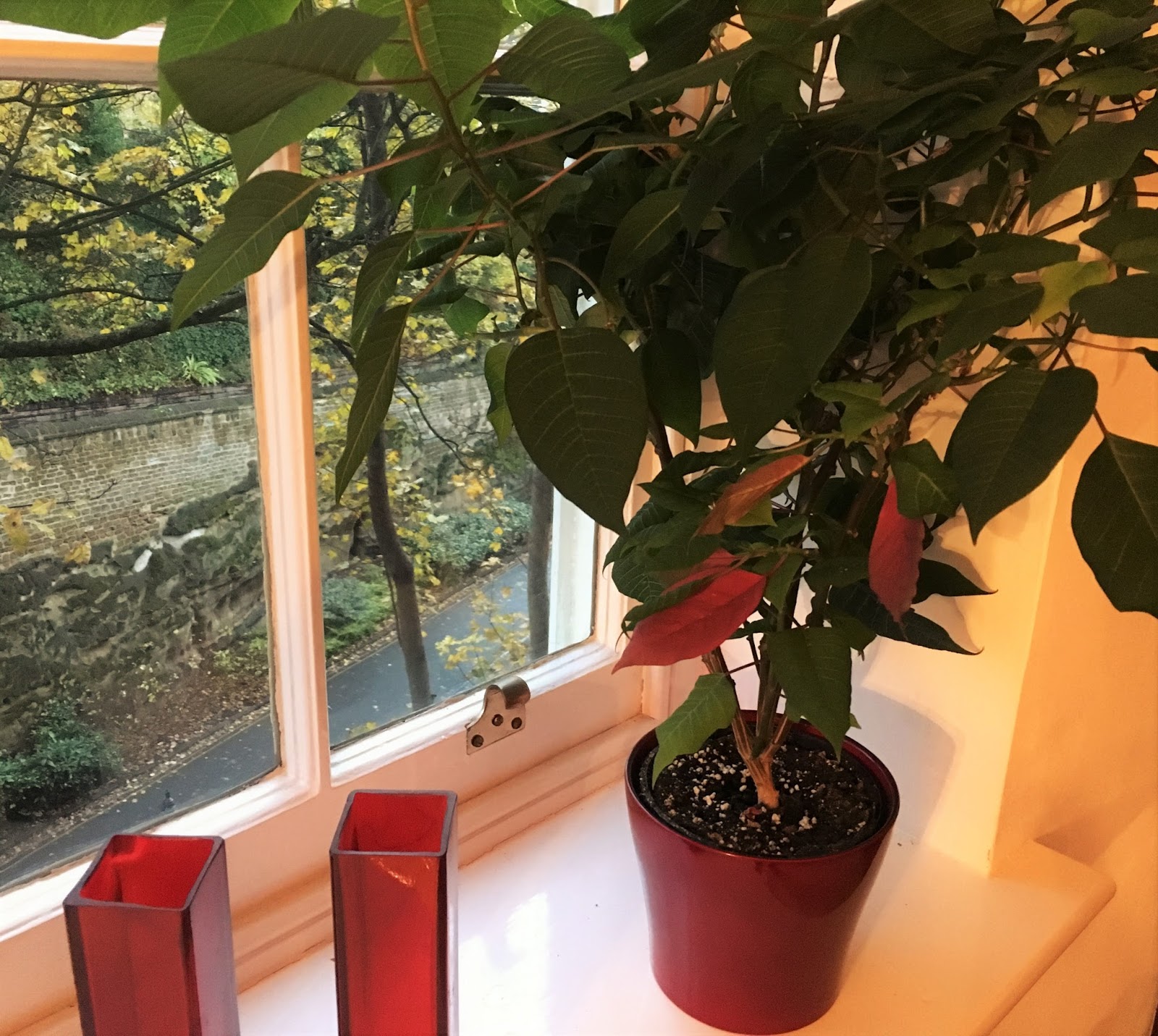
The final straw was the Twitter poll from the Archers. Deep into the current plot, which is being excellently delivered, alongside stunning digital media support, the Radio 4 soap chose to stage a Twitter poll.

If you use Twitter, you’ll have seen them before. It was clearly a ‘just for amusement’ question, with no prize listed - but it was evidently felt by Head Office that the poll Tweet had to be accompanied by a second Tweet with a link to a terms and conditions document. 

I clicked on the supplementary message, praying for a parody - but no.

We know such things are free.  We know they are run by Twitter. We know they are a bit of fun. Goodness, we know it all.

The painful prose was, no doubt, approved painstakingly in some nice central London office by people whose salaries we are paying. 

We probably have more cause to be alerted to the cost of unnecessary compliance procedures which have resulted from the over-regulation of this sector, when the pendulum swung too far from poor regulation.

Is it time to credit our citizens with an ounce of common sense and free our media from the sort of pointless coda which serves no-one?

Is it time for individuals to take responsibility for their own lives, and not expect the ASA's advertising rules to prevent us from eating too much; nor Ofcom's content rules to stop us being violent?


Grab my book 'How to Make Great Radio' now on Amazon. Available in print and e-book. Food for thought for today's presenters and producers - new and experienced.

What can radio learn from how it has handled COVID 19?

In times like this, you turn to your friends. And radio is a friend. Day or night, it’s there to pick-you up, to comfort you, to explai...